
Workday to Acquire C1.ai to Govern Agent Access
Workday signed a deal on October 12 to buy ConductorOne (C1.ai), betting that AI agents need identities and access controls like employees.
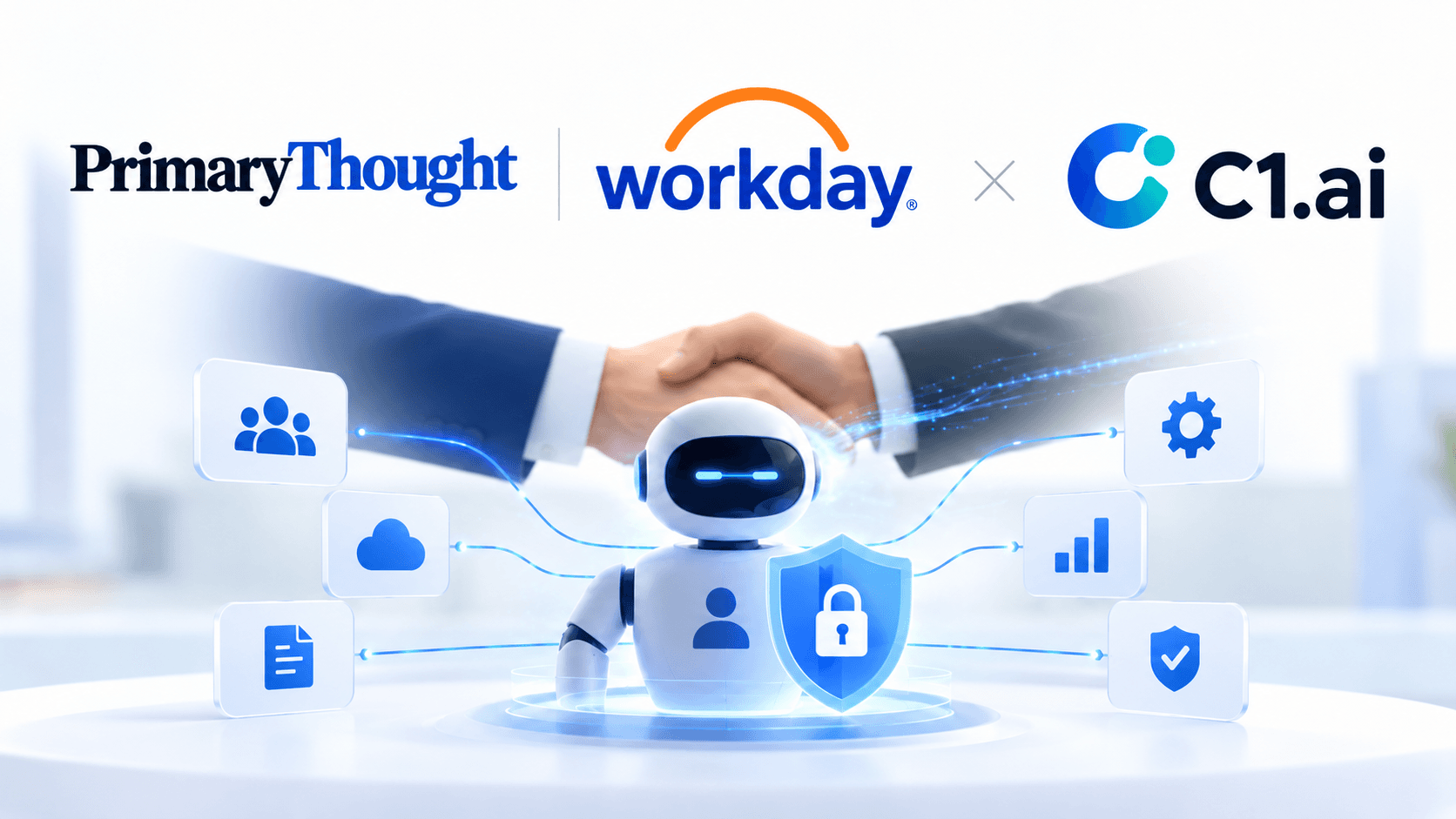
Workday has agreed to acquire ConductorOne, which markets itself as C1.ai, in a deal that treats AI agents as a class of workers that need identities and access rules like any employee. The agreement was signed on October 12, disclosed in a Form 8-K filed on October 13, and no price has been made public. The deal matters because it is one of the clearer examples of enterprise software vendors buying their way into agent governance, a problem that has grown as companies deploy autonomous software faster than they can control it.
What was announced
According to a report on the filing, Workday signed a definitive agreement on October 12, 2026 to acquire all outstanding capital stock of ConductorOne, Inc. The 8-K, filed the next day and signed by Workday's chief legal officer, did not disclose financial terms, and the transaction is subject to customary closing conditions. The press release attached to the filing carries the title "Workday to Acquire C1.ai, a Leading Agentic Identity Platform for People and Agents".
A separate account of the deal says it was announced at Workday Rising in Las Vegas on October 13 and that Workday expects it to close in its fiscal fourth quarter of 2027, which ends January 31, 2027. The same account notes that ConductorOne's Series B in October 2025 valued the company at roughly $353 million, but is explicit that this is not the purchase price. Total funding raised by the company is described as about $111 million.
Both accounts stress what is not yet known. The filing offers no explanation of strategy beyond the press-release title, and the other account says Workday has not yet published product packaging, pricing or integration details. Until closing, the two companies continue to operate separately, and Workday's own forward-looking statements warn that the deal may not close on time, or at all.
The problem Workday says it is solving
The rationale, as relayed in the second account, is that AI agents are spreading faster than companies can govern them. It cites two figures that appear in the companies' release: research finding that 95% of large U.S. companies run autonomous agents, and Deloitte research finding that only 21% have mature agent governance. These are numbers supplied by the companies in a deal announcement, and the underlying studies were not reviewed for this article, so they are best read as the sellers' framing of the market rather than established measurements.
C1.ai's co-founder Alex Bovee is quoted as saying that "Enterprises can't secure the AI era using yesterday's IT tickets." The point is a practical one. Traditional identity governance assumes a human requests access, a manager approves it, and an administrator grants it. An agent that acts continuously across email, customer records, code repositories, finance tools and cloud services does not fit that rhythm, and ticket-based workflows were not designed for it.
How the pieces would fit together
Workday already sells what it calls the Agent System of Record, which registers, secures, monitors and deactivates agents. According to the account of the deal, adding C1.ai would extend that registry into access control: deciding what an agent can reach across applications, requiring human approval for sensitive requests, and keeping logs of each action.
One planned element stands out. The model described ties access changes to Workday's hire, move and leave events, so an agent's permissions could be revoked automatically when its work ends. That mirrors how companies already handle people who change roles or depart, and it addresses a common weakness: forgotten credentials and standing access that outlive the project they were created for. Workday's Gerrit Kazmaier is described as framing the goal as a blended workforce of people and agents.
Why identity is the chosen angle
Treating agents as identities is a design choice, not the only one. Other approaches focus on monitoring model behaviour, filtering prompts or sandboxing execution. The identity framing argues that the most reliable control is limiting what an agent is able to touch in the first place, regardless of how it behaves. It also fits a vendor whose core product is the system of record for employees, which gives Workday a natural place to attach agent permissions.
Consolidation context
The purchase continues a pattern of enterprise vendors acquiring agent-related capabilities rather than building them. An August 2026 roundup of AI deals from Channel Insider shows similar moves elsewhere: Fortinet agreed to buy Virtue AI, which offers AI runtime protection, and Dynatrace agreed to buy Arize, an AI observability and evaluation platform. In each case an established vendor is adding a layer for running, watching or protecting AI systems.
The common thread is that the control layer around agents is becoming a product category of its own. Companies that have deployed agents now need to answer who authorised them, what they can see and what they did, and incumbents with existing customer relationships are moving to supply the answers.
What to watch next
The first open question is price. Without a disclosed figure, it is impossible to judge how Workday values agent governance relative to ConductorOne's last private valuation. Workday's next financial filings may reveal more once the deal closes.
The second is integration. The goal described is governing agent access across many applications, and customers outside Workday's ecosystem will want to know whether the product stays usable for them. Workday has not said how the product will be packaged or sold, and it has not said whether it will remain available to organisations that do not use Workday for human resources.
The third is regulatory and closing risk. The companies expect the deal to close by the end of January 2027, subject to customary conditions, and the timeline will show whether any review slows it.
The last question is whether the governance numbers hold up. If the claim that most large companies run agents while few govern them well is borne out by independent surveys, demand for this category will grow. If agent deployments prove narrower than the headline figure suggests, acquirers may have paid for a problem that arrives more slowly than expected. For now, what is certain is limited to the agreement itself: a signed deal, an undisclosed price, a January 2027 target and a clear statement that Workday sees agents as workers who need managed access.
Frequently Asked Questions
When was the Workday and C1.ai deal signed?
Workday signed a definitive agreement on October 12, 2026 and filed a Form 8-K on October 13.
How much is Workday paying?
The price has not been disclosed in the press release or filing.
When is the deal expected to close?
One account says Workday expects closing in its fiscal fourth quarter of 2027, ending January 31, 2027, subject to customary conditions.
What does C1.ai add?
According to the account of the deal, it would extend Workday's Agent System of Record into access control for agents, with human approval for sensitive requests and action logs.