
Constructor Adds In-Chat Stripe Checkout to Shopping Agents
Constructor says shoppers can now pay inside its AI shopping agents via Stripe, aiming to close the gap between AI discovery and purchase.

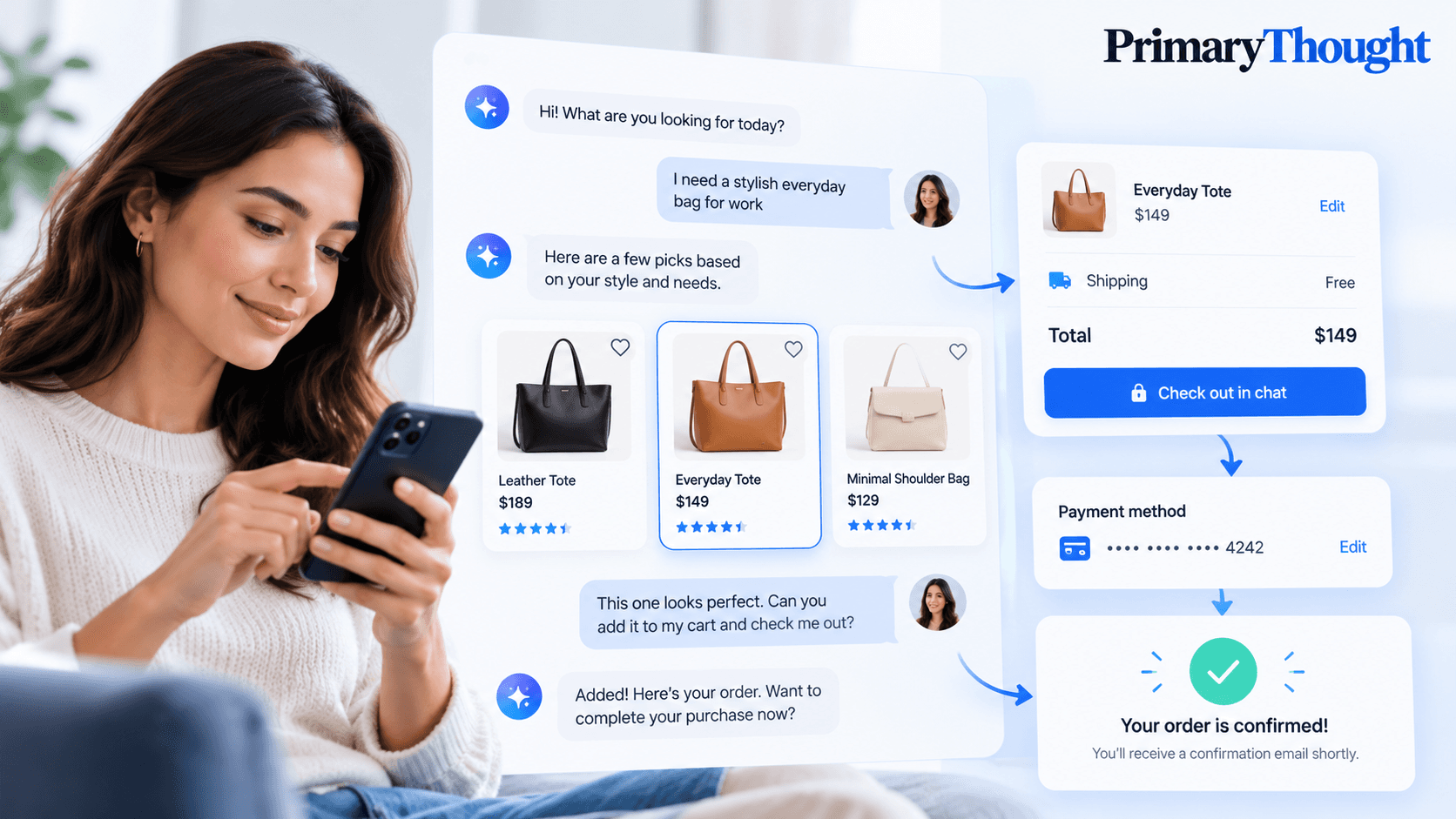
Constructor, a product-discovery vendor used by retailers such as Sephora and The Very Group, announced on 5 October 2026 that shoppers can now pay for items without leaving its on-site AI shopping agents. The feature, called Agentic Checkout, routes payment through Stripe, and it matters because it targets the awkward hand-off between an AI conversation and a conventional checkout page, one of the most visible weak points in agentic commerce so far.
The launch is a company announcement, and the claims below are attributed accordingly. What it shows is where retail AI is heading: away from assistants that merely recommend products and toward assistants that complete the sale.
What Constructor announced
According to Retail Tech Innovation Hub, shoppers on a retailer's site or app can find products, ask questions, receive personalised recommendations and refine their choices, then check out and pay without leaving the agent. Payment options include the Link by Stripe digital wallet as well as other methods. PYMNTS, which also covered the announcement, says the offering is available worldwide and lets both human shoppers and AI agents find and buy within a single conversation.
The checkout capability sits inside two existing Constructor products. The AI Shopping Agent takes natural-language requests and gives guidance based on a shopper's context, history, and intent. The AI Product Insights Agent answers product-specific questions on product detail pages. Constructor says Agentic Checkout will extend to more touchpoints across retailers' digital properties later this year.
Constructor describes itself as the first company to offer Stripe-powered checkout directly inside an onsite shopping agent. That "first" is the company's own claim, and neither outlet independently verified it. Retail Tech Innovation Hub lists Sephora, The Very Group, Monica Vinader, White Stuff and Furniture Village among the retailers Constructor serves, but its article describes them as clients of the company, not as confirmed users of the new checkout feature, and the PYMNTS article names no retailers at all. Readers should not assume that any particular brand has switched Agentic Checkout on.
The problem it is trying to solve
Constructor's framing, as reported by PYMNTS, is that existing agentic tools mostly help with discovery and then push the shopper into a disconnected purchase flow. The company says its product removes that friction for retailers. Chief executive Eli Finkelshteyn put the pitch this way, in words carried by both outlets: agentic commerce promises that a shopper can express what they need and AI can help at every step, which requires best-in-class discovery and then best-in-class checkout.
Whether the friction is as damaging as the company suggests is an open question, but the logic is easy to follow. Every extra page between a recommendation and a payment is a place where a shopper can drop out. Embedding payment in the conversation shortens that path. It also changes who controls the moment of purchase: instead of the retailer's standard checkout flow, the transaction happens inside the agent interface the retailer or its vendor has built.
Why the data points toward this shift
PYMNTS cites its own research arm, PYMNTS Intelligence, in reporting that 23% of consumers now begin their retail buying research with AI, and that 59% of AI shoppers say they now research on AI what they used to look for on Amazon. These are the publication's survey figures, and the article as opened does not give the sample or method, so they should be read as indicative rather than definitive. Still, if even part of that behaviour is accurate, retailers have a commercial reason to make sure the AI interface they control can close a sale and not simply hand the customer back to a search engine or a marketplace.
PYMNTS also quotes its chief executive, Karen Webster, observing in a column that consumers have searched in one place and bought in another for more than twenty years. Agentic checkout is an attempt to collapse those two places into one. That is the strategic point: whoever owns the conversation increasingly owns the customer relationship, the data, and the margin that would otherwise go to an intermediary.
What retailers and shoppers should weigh
For retailers, the appeal is conversion and control, but several practical questions remain unanswered by the announcement coverage. The sources do not say how the feature handles returns, order changes, fraud checks, or disputes when a purchase was assembled through a conversation. They do not describe what happens when an agent recommends the wrong item and the shopper pays anyway. Nor do they give any conversion or revenue results from live deployments. Those are the numbers an editor or a retail technology buyer would want before treating the launch as more than a product announcement.
For shoppers, the trade-off is convenience against clarity. A conversational flow can feel faster, but it can also compress the review steps, such as seeing the full basket, delivery charges, and terms, that a standard checkout page makes explicit. How clearly any given implementation presents those details is something the announcement does not address, and it will vary by retailer.
For payments companies, the move reinforces a pattern. Stripe's wallet is the named payment option here, which gives it a presence inside retailers' own AI experiences, not only on checkout pages. Neither article details commercial terms between Constructor, Stripe and retailers, so the economics are unknown.
What to watch next
Three things will indicate whether this is a durable shift. First, whether named retailers confirm they have enabled the feature and publish results, which would move the story from vendor claim to customer evidence. Second, how quickly the promised expansion to further touchpoints arrives, since a checkout confined to one chat window is a narrower product than one that follows the shopper across a site. Third, whether competing discovery and commerce platforms announce comparable in-conversation payments, which would test Constructor's claim to have been first and show whether the capability becomes standard.
The wider takeaway is modest but real. Retail AI has spent two years focused on helping people find things. The next phase, visible in this launch, is about letting the software complete the transaction. That raises the stakes for accuracy, transparency, and accountability in a way that product recommendations never did, because a wrong answer now costs the customer money. Retailers adopting these tools will be judged on how well they handle that responsibility, not only on how many baskets the agent converts.
Frequently Asked Questions
What did Constructor announce?
On 5 October 2026 Constructor launched Agentic Checkout, letting shoppers pay inside its AI Shopping Agent and AI Product Insights Agent, with payments through Stripe.
Which payment methods are supported?
Shoppers can use the Link by Stripe digital wallet or other payment methods, according to coverage of the announcement.
Is Constructor really the first to offer this?
That is Constructor's own claim, and the coverage reviewed did not independently verify it.
What is still unknown?
The coverage gives no conversion results from live use, and does not explain how returns or disputes are handled.