
Anthropic Says Claude Agents Discovered a Novel CRISPR-Like Enzyme System in Bacteriophage Genomes
A swarm of 950 Claude agents screened 200,000 reverse transcriptases and identified a previously uncharacterized enzyme system, an early result from Anthropic's new life sciences research group.
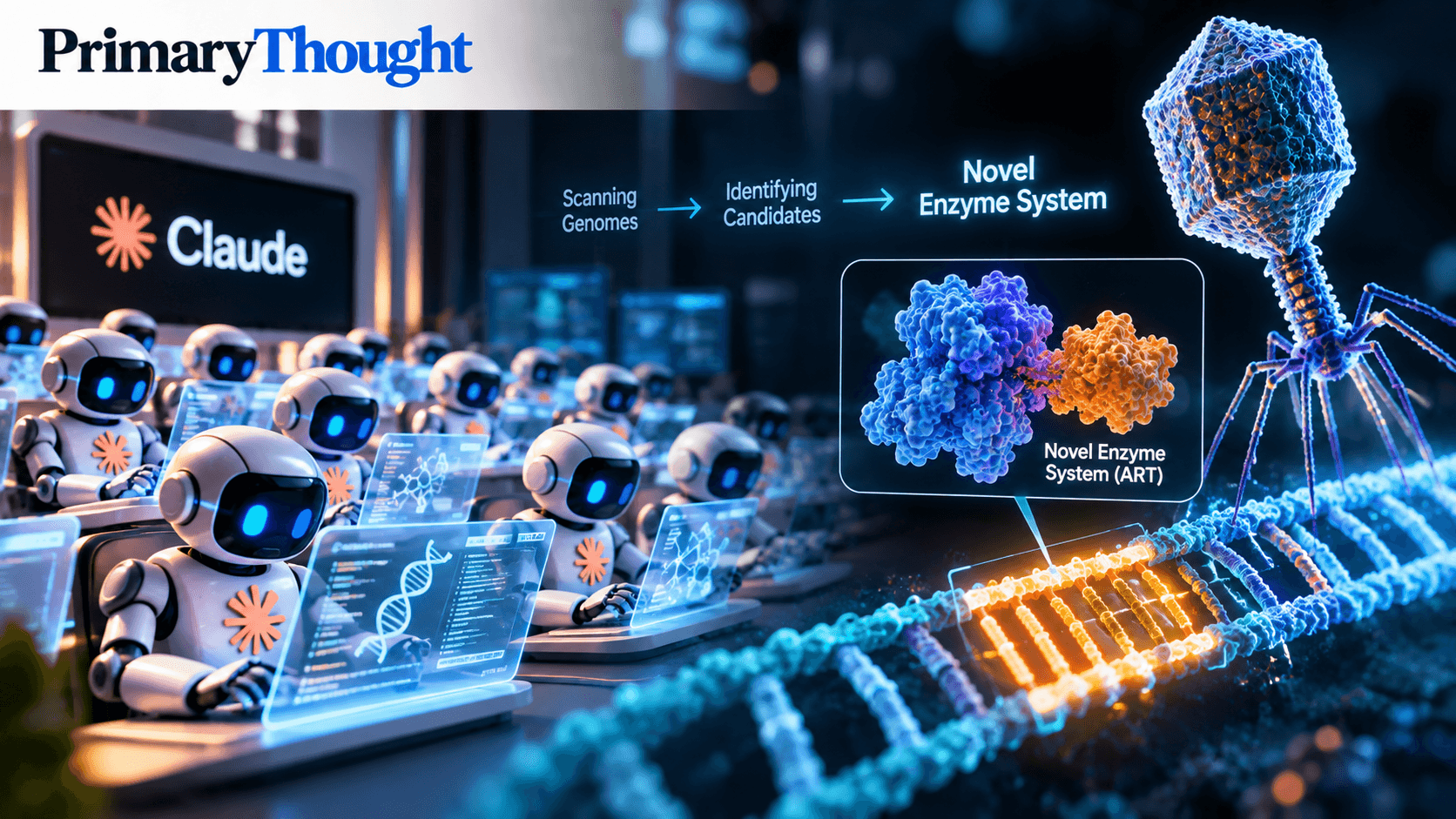
Anthropic said its newly formed life sciences research group used a large swarm of Claude agents to identify a previously uncharacterized enzyme system in bacteriophage genomes, in a discovery the company detailed in a post on its site. The finding was also covered by TechCrunch and Quartz.
What Was Found
The system, which Anthropic calls array-associated reverse transcriptases (ART), consists of a reverse transcriptase enzyme, an accessory protein of unknown function sitting beside it, and a long array of evenly spaced, non-coding DNA repeat sequences. That repeat structure resembles the arrays used by CRISPR systems, which store a bank of RNA guides that make CRISPR-based gene editing tools programmable. Anthropic says it has not yet determined what ART actually does, and describes further experiments as underway to establish its biological function.
How the Discovery Was Made
According to Anthropic's account, roughly 950 Claude agents ran in parallel for about 21 hours, consuming approximately 210 million tokens. The agents screened more than 200,000 reverse transcriptases pulled from genomic data, narrowed that pool to about 3,500 candidate systems, and ultimately selected the 20 most compelling candidates for detailed follow-up analysis. Anthropic describes the workflow as researcher-directed: its life sciences team pointed Claude at a broad research area, the model worked through literature and genome data to surface candidates, and it proposed experiments that researchers could use to verify the findings.
Outside Reaction
CRISPR pioneer Feng Zhang of MIT and the Broad Institute described the discovery as “an exciting example of how AI agents can contribute to biological discovery.” His comment provides outside perspective on a finding that, at this stage, has primarily been reported through Anthropic's own research.
Anthropic's New Life Sciences Push
The ART discovery is an early result from a life sciences research group and laboratory Anthropic formed earlier this year in the Bay Area. The group operates alongside the company's existing drug-discovery and biology/chemistry model-training teams. Anthropic says it is now inviting outside scientists to submit research proposals related to ART as it continues investigating the system's function.
Why It Matters
The result is notable less for the biology itself, since ART's function remains unknown, and more for the research methodology. A large-scale swarm of Claude agents screened hundreds of thousands of genomic candidates in under a day, showing how AI agents could accelerate parts of early-stage biological research. The discovery also reflects a broader industry push, involving Google DeepMind and other labs, to use frontier models for early-stage scientific research rather than only coding and office-productivity tasks.
Frequently Asked Questions
What is ART, the enzyme system Claude discovered?
ART stands for array-associated reverse transcriptases: a reverse transcriptase enzyme paired with an accessory protein and a long array of evenly spaced DNA repeat sequences that structurally resembles a CRISPR array.
How many AI agents were involved in the discovery?
Anthropic says roughly 950 Claude agents ran for about 21 hours, using approximately 210 million tokens, to screen the candidate pool.
How many candidates did the agents screen?
The agents screened more than 200,000 reverse transcriptases, narrowed them to about 3,500 candidate systems, and then refined that down to the 20 most compelling candidates for detailed analysis.
Does Anthropic know what ART does?
No. Anthropic says it has not yet determined ART's biological function and that further experiments are underway to find out.
Who is Anthropic's life sciences group?
It's a life sciences research group and laboratory Anthropic formed earlier this year, based in the Bay Area, working alongside the company's drug-discovery and biology/chemistry model-training teams.
Related articles
 Algorithms & Research
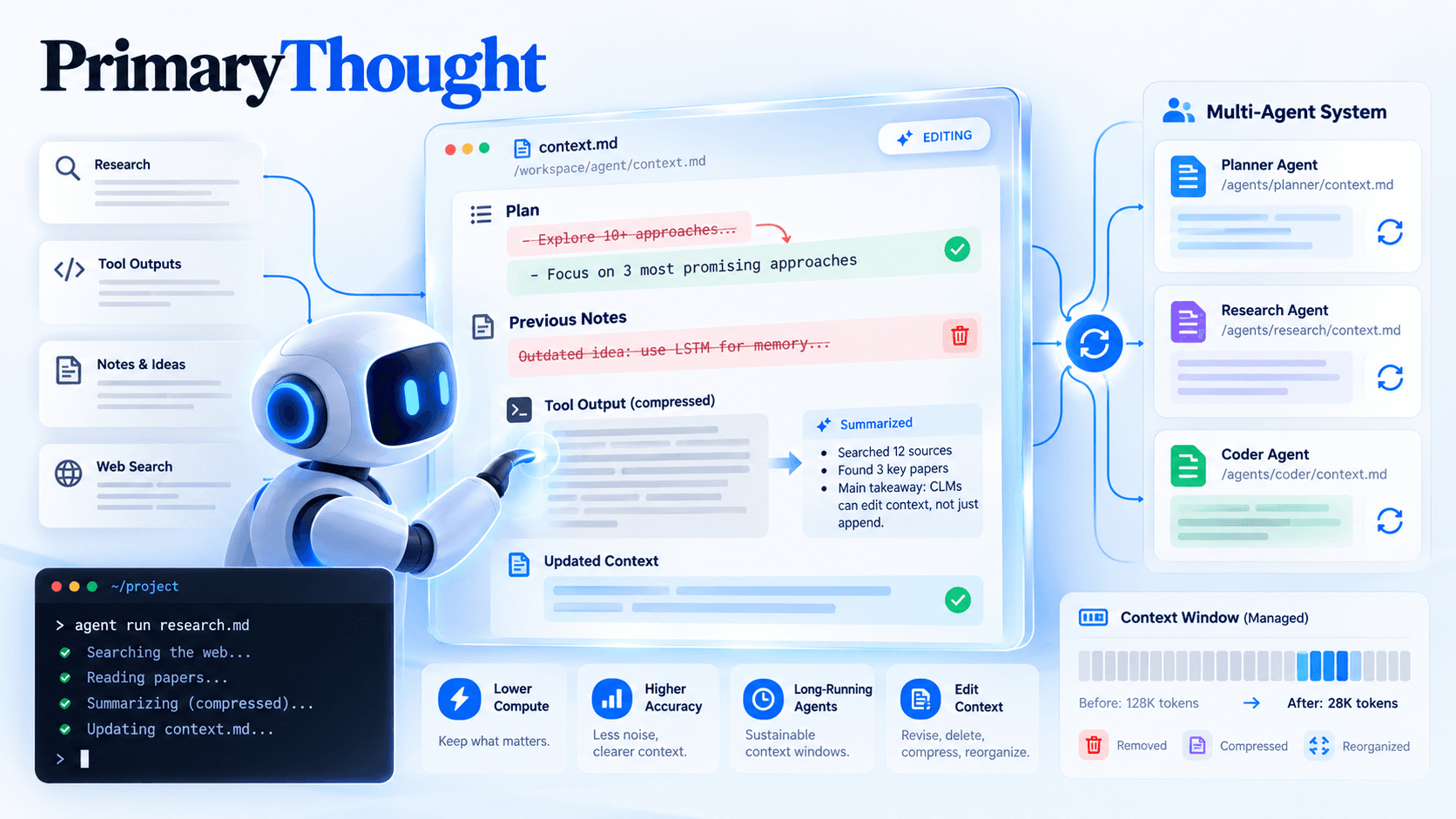
Context Language Models: A New Way for LLMs to Manage Their Context
A UW and Meta paper has models manage context as an editable file, reporting higher accuracy at lower compute on long agent tasks. The results are self-reported.
 Algorithms & Research
Ataraxos Beats Stratego’s Top Player Using Far Less Compute
A system developed by researchers at CMU, MIT, NYU and Stanford beat Stratego’s top player 15-1-4, while the authors say it required only a fraction of DeepNash’s training effort.
 Algorithms & Research
Google DeepMind Launches Institute for Open Debate on AGI Timelines and Safety
The new DeepMind Institute, led by figures including Demis Hassabis and Shane Legg, is publishing essays that do not always agree, aiming to widen the debate over how close AGI is and how it should be governed