
Stanford Study Links Heavy AI Companion Use to Lower Well-Being
A Nature Human Behaviour study of 1,131 Character.AI users finds intense, companionship-driven use is linked to lower well-being for people with small offline networks.
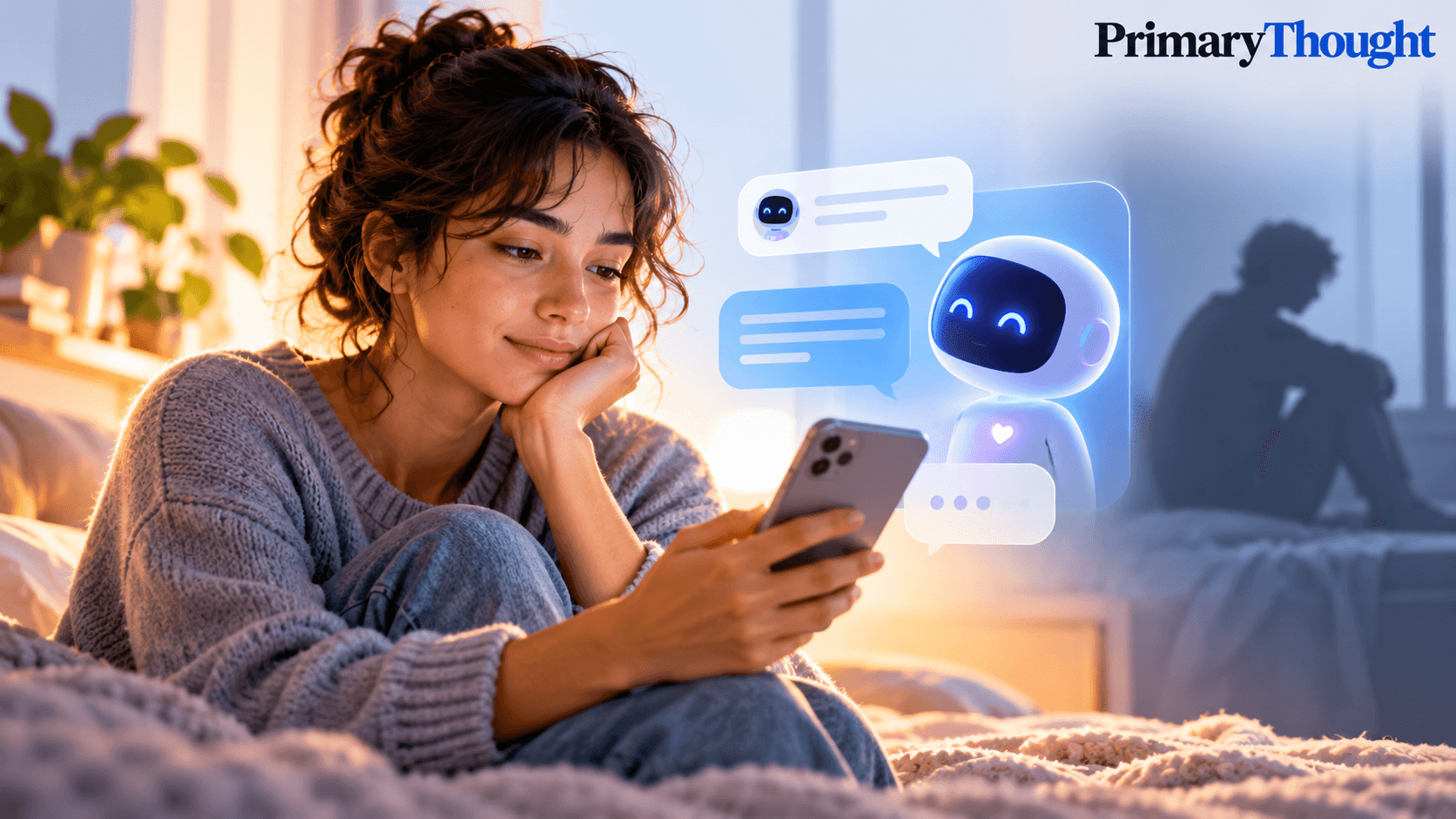
A Stanford study published in Nature Human Behaviour adds new evidence to a question surrounding AI companion chatbots: who actually benefits from talking to an AI as if it were a friend? According to the research team, people with small offline social networks who use Character.AI intensively, especially for companionship, report lower psychological well-being. The finding is correlational, but it comes with a detail that makes it hard to dismiss: the more sensitive information users shared with the bot, the worse they tended to feel.
What the researchers did
The work comes from Diyi Yang's group in Stanford's computer science department. Yutong Zhang and Dora Zhao, as described in Stanford HAI's write-up, surveyed 1,131 Character.AI users recruited through the Prolific research platform. Of those, 244 also donated their complete chat transcripts, which let the team compare what people said about their usage with what the conversations actually contained.
Participants named their main reason for using the bots, such as productivity, entertainment, curiosity, or a relational motive, and described their relationship with the chatbot in their own words. The researchers then used GPT-4o, LLaMA 3-70B and the TopicGPT tool to analyse the free-text answers and transcripts. Well-being was scored with the Comprehensive Inventory of Thriving, an established psychological instrument. The team looked at three main factors: motive, intensity of use, and willingness to disclose sensitive information, alongside the size of each person's offline social network.
What they found
Several results stand out. Only about 12 percent of participants said companionship was their primary motive for using the bots. Yet just over half described the chatbot as a friend, a companion or a romantic partner, and more than 80 percent of the donated chat sessions centred on emotional or social support. In other words, the label people give their reason for using the product understates how relational the use becomes in practice.
The link between intensity of use and well-being was not uniform. Heavy use initially appeared to be associated with better well-being, but that depended on why people were using the bots. Users who felt pride in their use, or who found it meaningful, scored higher. By contrast, intense use among people with smaller offline networks was associated with poorer well-being, and the association was strongest when companionship was the main motive.
The disclosure result is the most unusual. In human relationships, sharing personal information generally supports well-being. Here, News-Medical's summary of the paper notes that greater willingness to disclose sensitive information was linked to lower well-being, which the authors contrast with the usual effect of self-disclosure between people.
How the authors interpret it
The researchers offer explanations rather than proof. They suggest a chatbot cannot reciprocate personal disclosures the way a person can, and that it may respond poorly to emotionally heavy conversations. They also point to design: Zhao is quoted as saying these companions "are designed to promote engagement." The team describes AI companionship as a "social snack", something that offers short-term relief without long-term nourishment, and suggests a possible cycle in which isolated users lean more on the bot, have less human contact, and feel lonelier as a result.
That cycle is a hypothesis. The study does not test it directly, and nothing in the reporting shows that chatbot use caused the lower well-being scores.
Why the caveats matter
Readers should weigh the limits as seriously as the headline. The data are self-reported and cross-sectional, so the direction of causality could run the other way: people who are already lonelier or have lower well-being may be more drawn to intense companion use and more willing to confide in it. The sample is limited to Character.AI users recruited through an online panel, so the results may not carry over to other products, such as general-purpose assistants used for occasional emotional support, or to people who do not take part in online research panels. News-Medical's summary also notes that the article does not report effect sizes or detailed statistics, which makes it hard to judge how large the associations are in practice.
The finding about pride and meaning also cuts against a simple "companions are bad" reading. Intense use was not uniformly associated with worse outcomes; the motive and the person's wider social situation mattered. That fits a broader pattern in research on digital tools, where the same behaviour may complement human interaction for one person but replace it for another.
Why it matters for product design and policy
Companion apps compete on engagement, and the study's authors argue that this incentive may work against the users who are most vulnerable. If the risk is concentrated among people with small offline social networks, some of the users most drawn to AI companionship may also have fewer sources of human support. That is a design question as much as a research one, because interventions are within a developer's control.
The team says it plans to work out which specific features of chatbot interaction drive the association. It also proposes testing interventions such as usage limits and redirecting users toward human support when a conversation signals distress, and it stresses educating the public about the possible downsides. Zhang is quoted as saying that people need to understand the potential downside. Those ideas are proposals, not tested remedies, and the reporting does not say that any company has adopted them.
For regulators and platform operators, the practical implication is narrower than a ban or a warning label. A product that can detect heavy, companionship-driven use combined with distress signals has a defined moment at which it could point someone to other support. Whether that works, and whether it can be done without being intrusive, is exactly what the follow-up research is meant to establish.
What to watch next
Three things would sharpen the picture. First, longitudinal data that follows the same users over time would help separate cause from selection. Second, replication on other platforms and with other user groups would show whether the Character.AI result is specific to that product's design. Third, intervention trials, such as testing usage limits or referral prompts, would show whether any of the suggested safeguards change outcomes.
Until then, the study is best read as a cautionary signal for a particular group rather than a verdict on AI companionship in general. It shows a measurable association between intense, companionship-driven use, a small offline network and lower reported well-being, and it suggests that the habit of confiding in a bot may not carry the benefits that confiding in a person usually does. What it cannot yet tell designers, clinicians, or lawmakers is how much of that is caused by the product, and how much by the circumstances of the people who choose it.
Frequently Asked Questions
Who conducted the study?
Yutong Zhang and Dora Zhao in Diyi Yang's lab at Stanford, published in Nature Human Behaviour and reported by Stanford HAI on August 4, 2026.
How many people took part?
1,131 Character.AI users were surveyed via Prolific, and 244 of them donated complete chat transcripts.
Does the study show chatbots cause lower well-being?
No. The findings are correlational and self-reported, from one platform, so causation is not established.
Which users appeared most affected?
Intense users with smaller offline social networks, especially those whose main motive was companionship, and those more willing to share sensitive information.
Related articles
 Human-AI Relationships
California Sets Child-Safety Rules for AI Companions
California's SB 1119 regulates companion chatbot design for minors, with age checks, audits and per-child penalties.