
Sereact AI Robots Sort Zalando Returns at Two CEVA Warehouses
Sereact's AI-powered dual-arm robots are sorting Zalando fashion returns at two CEVA Logistics warehouses in Germany and Poland, but key performance data remains undisclosed.
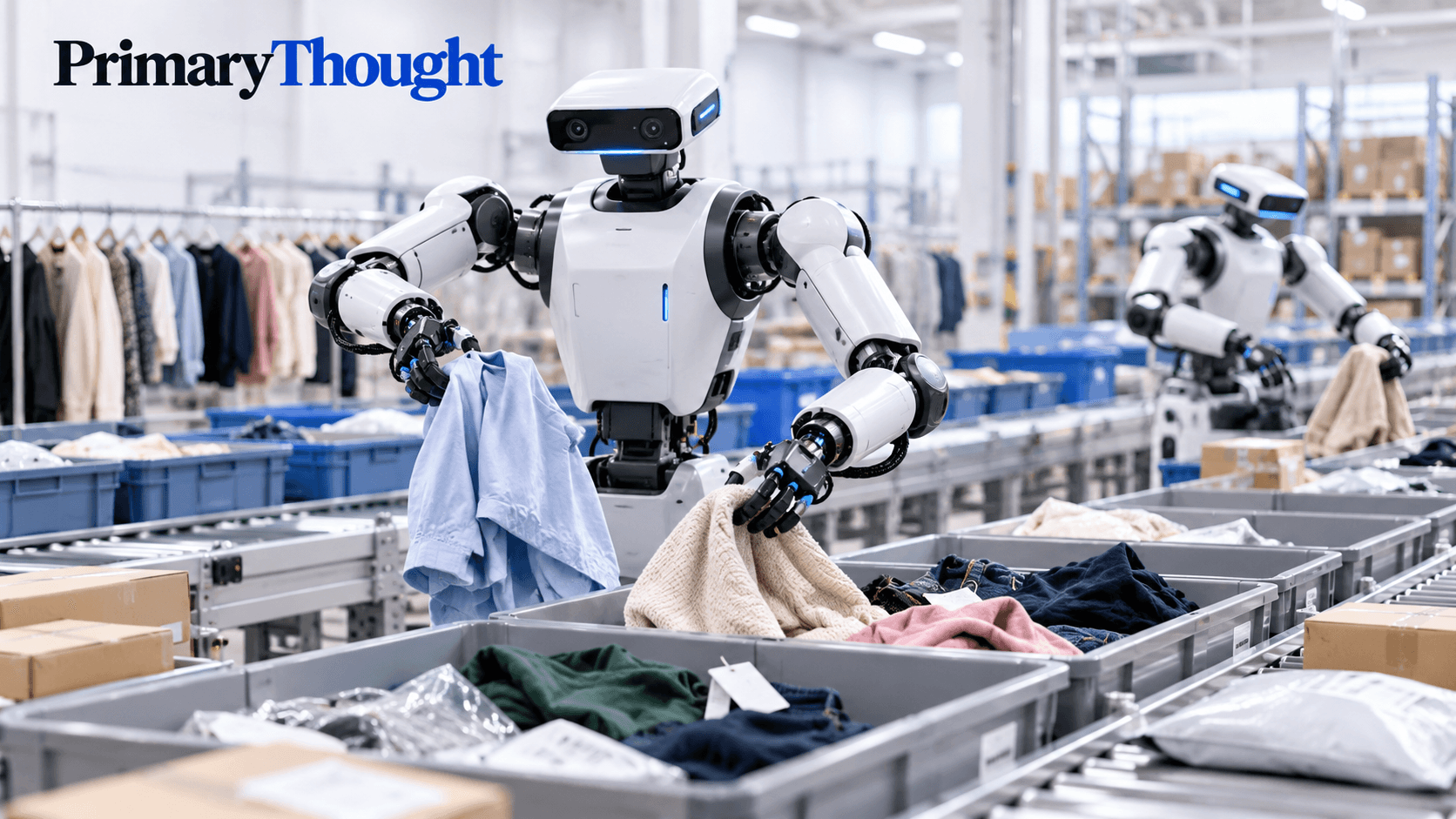
AI-powered robots from German robotics company Sereact are now sorting fashion returns for Zalando at two CEVA Logistics warehouses in Greven, Germany, and Świebodzin, Poland. The three companies announced the deployment on October 7, 2026.
The robots use Sereact's Cortex AI platform to identify, pick up, and sort returned clothing without needing separate training for each product. This is important because returned items often arrive in different conditions and packaging, making them difficult for traditional automated systems to handle.
The deployment marks an early step toward wider use of physical AI in e-commerce logistics. However, the companies have not yet published detailed results showing how accurately or efficiently the robots perform in these warehouses.
What Was Announced
Sereact's AI-powered robots are now handling fashion returns for Zalando at two CEVA Logistics warehouses in Germany and Poland. According to Sereact's official announcement, the deployment is the first step in a broader plan to expand automated returns processing across Europe.
The robots use Sereact's Cortex physical AI platform to identify, pick up, and sort returned clothing. The companies say the system can handle items it has not encountered before without requiring training for each product or a fixed product list.
This is significant because returned clothes often arrive crumpled, loosely packed, or in different conditions, making them difficult for traditional robots programmed to handle specific items.
Sereact CEO and co-founder Ralf Gulde described returns handling as one of the toughest challenges in fashion logistics. He explained that a system limited to products it already recognizes would struggle in a returns operation where items arrive in unpredictable conditions.
How the Partnership Works
CEVA Logistics is deploying Sereact's robots through a Robotics-as-a-Service (RaaS) model. This approach generally allows companies to use robotic systems through ongoing service agreements rather than purchasing the equipment outright. However, the companies have not disclosed the contract value, duration, or number of robots installed.
Zalando also has a financial interest in Sereact. In July 2026, the retailer joined the robotics company's Series B funding round as a strategic investor, bringing the total to $116 million. This means Zalando is both a customer of Sereact's technology and an investor in the company.
Sereact has also announced robotics deployments with other logistics partners, including Arvato. Its wider customer base includes major companies such as BMW and Mercedes-Benz.
These partnerships show growing commercial interest in Sereact's technology, but they do not establish how efficiently the robots handle Zalando's returns or whether the deployment delivers measurable cost savings.
What Is Confirmed and What Remains Unclear
Sereact, Zalando and CEVA Logistics have confirmed that dual-arm robots powered by Cortex are operating at two warehouses in Germany and Poland. The systems are provided through a Robotics-as-a-Service model, with plans to expand returns automation across Europe.
However, the companies have not disclosed key performance details, including the number of robots installed, how many items they process per hour, their sorting accuracy, or how often employees need to intervene. Robotics 24/7 also notes that robot counts, processing volumes, and throughput figures were not provided.
How AI Robots Could Affect Warehouse Workers
Sereact, Zalando and CEVA Logistics say the robots will handle repetitive sorting tasks and reduce physical strain on warehouse employees. Workers are expected to focus more on supervising robots, handling difficult returns and checking quality. The companies have not published data showing how the deployment affects staffing levels or working conditions.
The announcement comes in the same year that Zalando decided to close its logistics centre in Erfurt, Germany, affecting thousands of workers. Zalando attributed that decision to changes in its European logistics network, not the Sereact deployment. There is no evidence linking the closure to these robots.
The larger question is how warehouse automation will affect jobs as it expands. The companies have not said whether the new systems will reduce staffing needs or how many employees will move into supervisory roles.
Why AI Robots Matter for Retail Logistics
Handling returns is a major challenge for online fashion retailers. Returned clothes must be checked, sorted, and prepared for resale before they can go back into inventory. Faster processing could help retailers reduce handling costs and make products available for sale sooner.
Unlike products arriving from manufacturers, returned clothing is often difficult to handle consistently. A warehouse may receive shirts, trousers, jackets, and other garments in different sizes, materials, and conditions. Soft fabrics can fold, stretch or become tangled, making them harder for robotic systems to identify and grasp reliably. This is why handling unfamiliar items is an important capability for returns automation. Sereact says its Cortex platform is designed to address this challenge, although the company has not disclosed how successfully it handles different types of garments at the Zalando facilities.
Sereact's Cortex platform aims to improve this process by allowing robots to recognize and handle items they have not encountered before. Unlike traditional systems designed for specific products, the technology is intended to work with a wider variety of clothing and packaging.
However, its effectiveness at scale remains unproven in the published results. If the robots cannot handle certain items, employees may still need to process those returns manually. The key question is how much of the sorting process Cortex can reliably automate.
What to Watch Next
The next step is to see how well Sereact's robots perform in daily warehouse operations. Key measures include sorting accuracy, the number of items requiring human assistance, and processing speed.
It will also be important to see whether Zalando, CEVA Logistics and Sereact expand the technology to more warehouses across Europe, as planned. More information about operating costs and performance during busy return periods would help assess its commercial value.
For now, the robots are operating at two warehouses, but their long-term efficiency and financial benefits remain unverified by publicly available performance data.
Frequently Asked Questions
What is Sereact's Cortex?
Cortex is Sereact's physical AI platform. The companies say it lets dual-arm robots identify, grasp and sort items they have not seen before, without article-specific training or predefined SKU sets.
Where are the robots deployed?
At CEVA Logistics sites in Greven, Germany, and Świebodzin, Poland, handling returned Zalando fashion items.
How is the system paid for?
CEVA is delivering it under a Robotics-as-a-Service model. Pricing, contract length and robot counts have not been disclosed.
Has performance been independently verified?
No. Throughput, accuracy and robot counts are not stated, and the performance claims come from the companies.
Related articles
 Retail & Logistics AI
Constructor Adds In-Chat Stripe Checkout to Shopping Agents
Constructor says shoppers can now pay inside its AI shopping agents via Stripe, aiming to close the gap between AI discovery and purchase.