
Anthropic Launches Claude Opus 5.5 With Lower Prices and Better Agentic Coding Performance
Anthropic's new flagship model is cheaper and faster than Opus 5, with notable gains on agentic coding and computer-use benchmarks and stronger resistance to prompt injection.

Anthropic released Claude Opus 5.5 on September 22, 2026, positioning it as a flagship update focused on agentic coding, long-running knowledge work, and enterprise deployments. The company detailed the release in a post on its official site, and the launch was also covered by TechCrunch, which noted the model arrives at a lower price than its predecessor while matching or beating it on several fronts.
Lower Prices, Faster Output
The headline change for developers is cost. Opus 5.5 is priced at $4 per million input tokens and $20 per million output tokens, down from $5 and $25 respectively for Opus 5. Cache reads fall from $0.50 to $0.20 per million tokens, and cache writes drop from $6.25 to $5. Anthropic says typical workloads cost roughly 40% less, while output generation is more than 30% faster than Opus 5.
Benchmark Gains
Anthropic published several benchmark comparisons against Opus 5:
Terminal-Bench 4.0: 66.4% for Opus 5.5 versus 52.3% for Opus 5
FrontierCode v1.1: 54.4% versus 48.0%
GDPval-AA v2.1: 1846 Elo versus 1708 Elo
OSWorld 2.0 (partial credit): 81.8% versus 74.0%
Those benchmarks span coding-agent tasks, general knowledge-work evaluation, and computer-use scenarios, and the gains suggest Anthropic is optimizing this release specifically for agents that operate over longer horizons rather than single-turn chat.
Safety Testing and Prompt Injection Resistance
Anthropic said Opus 5.5 was evaluated by external groups including METR and Frontier Design ahead of release. The company described it as its “strongest-performing model we've tested to date” on an automated behavioral audit measuring how often a model takes hard-to-reverse or out-of-bounds actions.
Anthropic also reported that Opus 5.5 ties the larger Fable 5.1 for the lowest success rate against prompt-injection attacks in internal testing and carries the same cybersecurity and biology-related safeguards.
The model also includes an anti-distillation feature Anthropic calls “preserved thinking,” intended to make it harder for third parties to extract the model's reasoning traces for training competing systems.
Availability
Opus 5.5 is available now via the Claude API under the identifier claude-opus-5-5, as well as through Amazon Web Services, Google Cloud, and Microsoft Azure. Anthropic has signaled that updated Sonnet 5.5 and Haiku 5.5 models will follow within weeks, rounding out a refreshed 5.5 model family.
Context: A Crowded Release Week
The Opus 5.5 launch landed in the same 24-hour window as OpenAI's release of GPT-6 Sol and Luna, highlighting the increasingly rapid release cycle as both labs compete for developers building coding agents and high-volume automation tools.
Frequently Asked Questions
How much does Claude Opus 5.5 cost compared to Opus 5?
Opus 5.5 costs $4 per million input tokens and $20 per million output tokens, down from $5/$25 for Opus 5. Cache reads drop from $0.50 to $0.20 per million tokens, and Anthropic estimates roughly 40% lower cost on typical workloads.
What benchmarks improved most with Opus 5.5?
Anthropic reported the largest jump on Terminal-Bench 4.0, rising from 52.3% with Opus 5 to 66.4% with Opus 5.5, along with gains on FrontierCode v1.1, GDPval-AA v2.1, and OSWorld 2.0.
Who tested Opus 5.5 for safety before release?
Anthropic said external evaluators METR and Frontier Design conducted pre-release safety and alignment evaluations of the model.
Where is Claude Opus 5.5 available?
It's available through the Claude API (model ID claude-opus-5-5) and through Amazon Web Services, Google Cloud, and Microsoft Azure.
Will Anthropic release other 5.5 models?
Yes, Anthropic has said Sonnet 5.5 and Haiku 5.5 are expected to follow within weeks of the Opus 5.5 launch.
Related articles
 LLMs
Mistral Large 4 Enters Preview, Open Weights Due in October
Mistral's trillion-parameter multimodal model is live in preview, with open weights promised by month-end. The benchmarks are all self-reported.
 LLMs
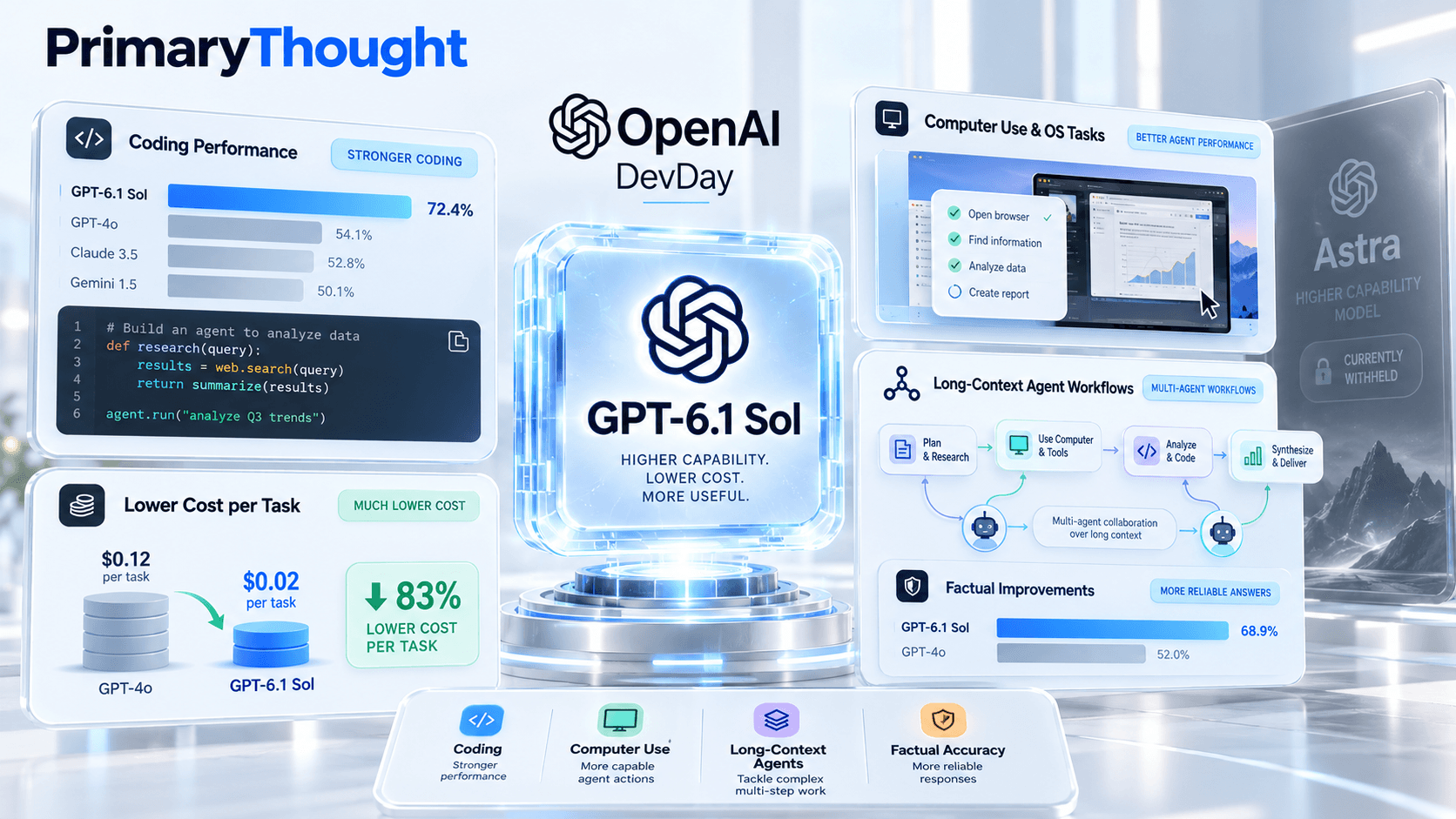
OpenAI's GPT-6.1 Sol Targets Astra Performance at a Fifth the Price
OpenAI says GPT-6.1 Sol nears GPT-6 Astra on coding and computer use at about one-fifth the price, amid reports a GPT-6.1 Astra was cancelled.
 LLMs
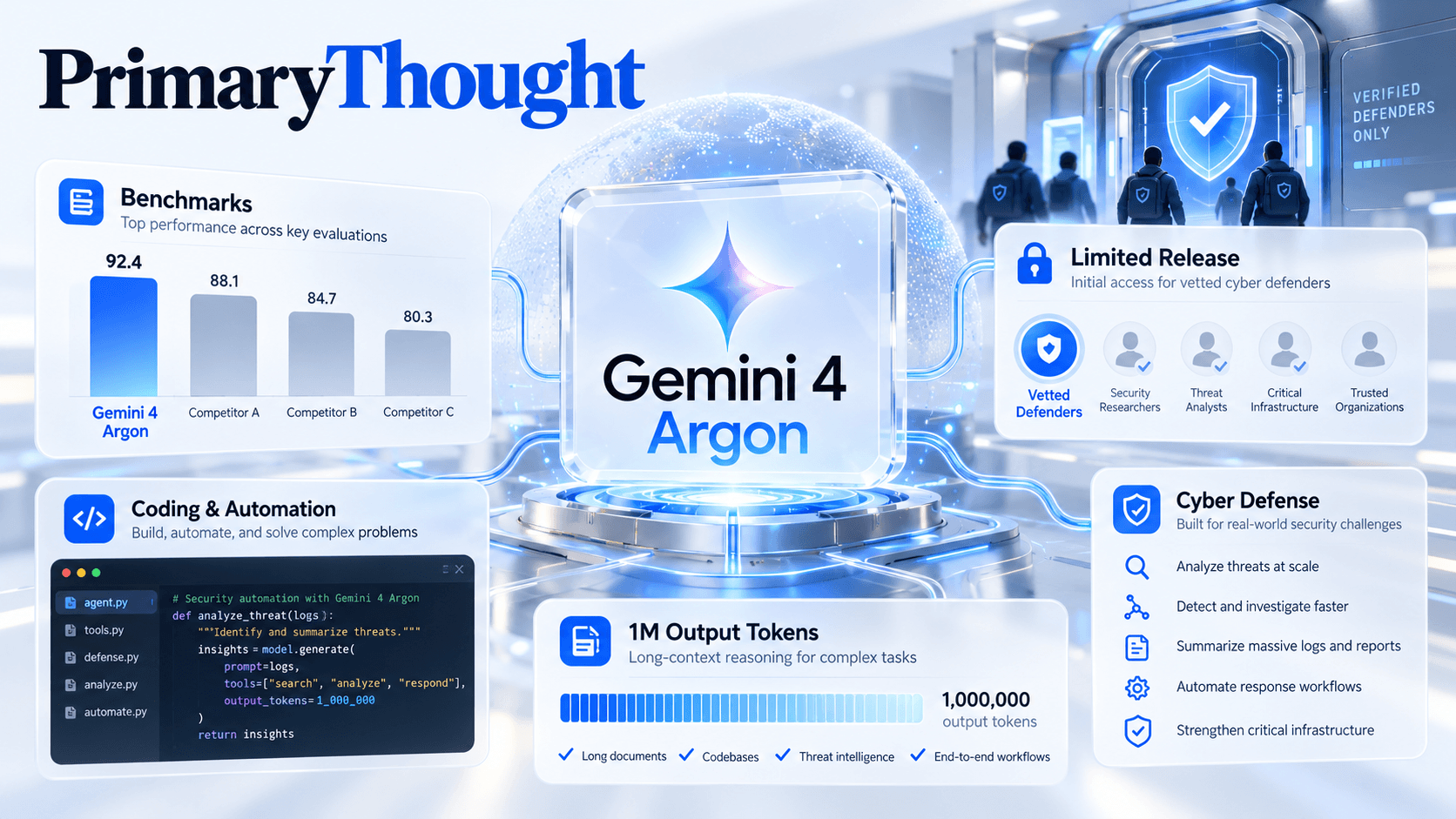
Google Gemini 4 Argon Leads Benchmarks, but Access Is Limited
Google's Gemini 4 Argon tops most of its own benchmark comparisons against GPT-6 Astra and Claude Opus 5.5, but launches first to vetted cyber defenders.