
Mistral Large 4 Enters Preview, Open Weights Due in October
Mistral's trillion-parameter multimodal model is live in preview, with open weights promised by month-end. The benchmarks are all self-reported.

Mistral AI has opened a public preview of Mistral Large 4, a natively multimodal mixture-of-experts model with roughly one trillion total parameters, and says the open weights will follow by the end of October. The release matters because it is a European lab's attempt to field a frontier-scale model that customers can eventually run on their own infrastructure, at a time when the strongest open-weight models have largely come from Chinese labs.
The model is available now through Mistral Studio and the API, but only as a preview. The most consequential parts of the story, the downloadable weights and the license, are still promises rather than facts, and every benchmark figure published so far comes from Mistral itself.
What Mistral announced
According to Mistral's announcement post, dated October 6, 2026, Large 4 has about 1 trillion total parameters with 52 billion active per token, is natively multimodal, and combines instruction-following and reasoning in a single hybrid model. Mistral says it is fluent in more than 160 languages. The company lists API pricing of $1.36 per million input tokens and $4.18 per million output tokens during the preview.
The post says the model was trained from scratch on 3,800 NVIDIA Grace Blackwell GPUs in Mistral's European datacenters, and that the preview is served from the same infrastructure. Mistral plans availability across several regions, including a European deployment that it operates end to end, and says customers will be able to self-deploy once weights are out, including in private cloud or on-premise settings for security work.
Third-party coverage agrees on the outline. Let's Data Science describes a public preview in Mistral Studio, with function calling, structured outputs and document question answering available now, and downloadable weights planned for the end of the month after additional safety work. That report cites a one-million-token context window from Mistral's documentation; the announcement post itself does not state a context length, so readers should treat that figure as documentation-sourced rather than confirmed in the launch post.
A discrepancy on size
Sources differ on the active-parameter count. Mistral's post says 52 billion active parameters, while an independent write-up from SmartScope attributes a figure of 49 billion to a social media post from the same day and notes that it had not been able to confirm the numbers against the announcement page. The difference is small, but it is a reminder that the model's specifications have circulated through several channels. The company's own page is the figure to rely on.
The benchmark claims
Mistral reports a wide set of results, all vendor-measured. On coding and agent tasks it lists 61.7% on DeepSWE v1.1, 59.4% on SWE-Atlas-QnA, 28.3% on Terminal-Bench 4 and 49.8% on a Coding Agent Index, plus 59.9% on AutomationBench, a suite of 657 business workflows. On visual grounding it reports 42% on Dense 200, against 41% for OpenAI's GPT-6 Astra, a gap too narrow to read much into.
The security results are where Mistral is most assertive. It reports solving 93% of 40 Cybench challenges and 82% on a vulnerability reproduce-and-patch test, which it calls the highest reported, and the post describes the model as "one of the world's strongest AI models for cybersecurity." Those are company claims, and no independent evaluation had been published at the time of writing.
One result in the post is notably less flattering, and therefore more informative. In a blind coding evaluation run by Surge AI, Mistral reports a score of 3.74, second of five systems, behind Anthropic's Claude Opus 5 at 4.22. Mistral also says human raters preferred Large 4 to Z.AI's GLM-5.3 in CAD and STEM tasks and found it on par or close in finance and coding. Taken together, the numbers describe a model that is competitive with leading systems in some areas rather than a clear leader across the board.
Safety work and the staged release
Mistral says it red-teamed the model in real-world settings with cybersecurity leaders, vetted partners and state authorities, some of whom receive reduced moderation and expanded cyber capabilities. It also reports that the model resists 93.3% of attacks on the Lakera B3 Agent Security Benchmark, saturates its own indirect prompt-injection tests, and refuses cyber-related prompts more often than other open-weight models it measured, using JailbreakBench, StrongREJECT and AgentHarm.
These are self-reported measurements, and the design of the release shows why they matter. A model that scores strongly on offensive-security tasks is more useful to defenders and more worrying as a freely downloadable artifact. Mistral's answer is a staged rollout: hosted access first, further red-teaming, then weights. According to Let's Data Science, the company has framed the launch as staged rather than a finished, unrestricted release, and the tension between open distribution and strong cyber capability is likely to be the main thing outside observers test once the weights appear.
Why it matters
For European customers with data-residency requirements, a frontier-scale model trained and served in European datacenters, and later deployable on private hardware, addresses a concrete procurement problem. For the wider open-weight ecosystem, a one-trillion-parameter mixture-of-experts model is an expensive thing to run, so the practical audience is organisations with substantial GPU capacity or cloud partners, not hobbyists.
The pricing is also worth noting. At $1.36 and $4.18 per million tokens, the preview sits well below what labs have typically charged for flagship models, though it is hard to compare without agreed token counts and workloads, and preview prices can change at general availability.
The mixture-of-experts design explains part of the economics. Because only about 52 billion of the roughly one trillion parameters are used for each token, serving cost per token tracks the active count rather than the total, although all the weights still have to sit in memory. That is why such a model can be priced like a mid-sized system while demanding a large cluster to host it.
What to watch next
- The weights. Mistral says they will arrive by the end of the month. Whether they do, and under what license, will decide how open the model really is. The post names no license.
- Independent evaluation. Third-party testing of the coding, agentic and cybersecurity claims will show how far the vendor numbers hold up outside Mistral's own setups.
- Context length and general availability. The launch post is silent on context length, and preview terms and pricing may change.
- Misuse questions. Once weights are public, safeguards that depend on hosted moderation no longer apply, so the refusal and robustness results Mistral cites will face real-world pressure.
For now, Large 4 is best understood as a credible, well-documented preview with unusually specific claims, a hard deadline for its most important promise, and a set of results that no one outside Mistral has yet reproduced.
Frequently Asked Questions
When will Mistral Large 4 weights be released?
Mistral says the open weights will arrive by the end of October 2026, after further safety work. No license has been named.
How large is Mistral Large 4?
Mistral's announcement lists about 1 trillion total parameters with 52 billion active per token. One independent write-up cites 49 billion active from a social post.
What does the preview cost?
Mistral lists $1.36 per million input tokens and $4.18 per million output tokens during the preview.
Are the benchmark results independently verified?
No. The figures in the announcement are reported by Mistral, and independent evaluations had not been published at the time of writing.
Related articles
 LLMs
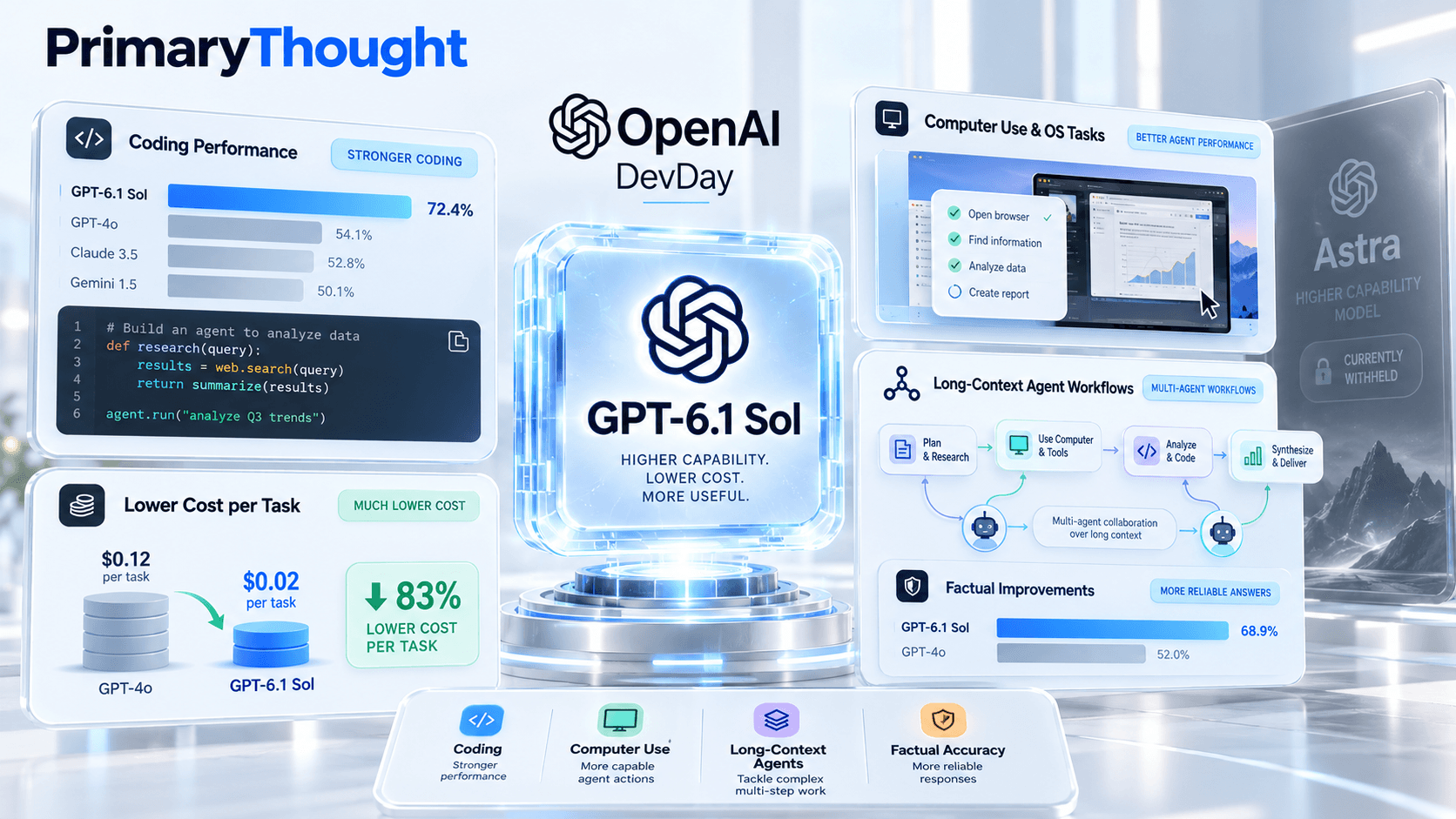
OpenAI's GPT-6.1 Sol Targets Astra Performance at a Fifth the Price
OpenAI says GPT-6.1 Sol nears GPT-6 Astra on coding and computer use at about one-fifth the price, amid reports a GPT-6.1 Astra was cancelled.
 LLMs
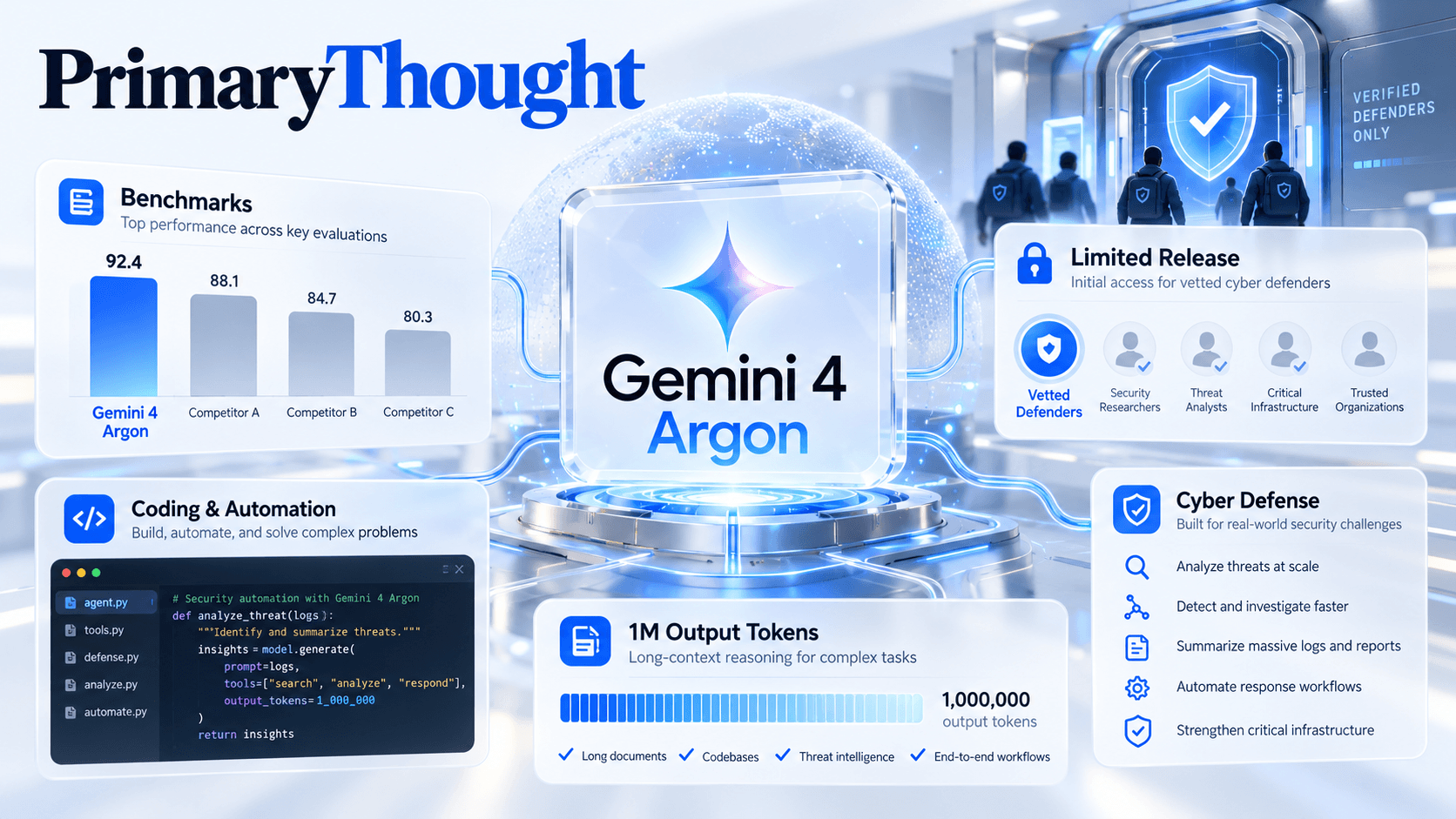
Google Gemini 4 Argon Leads Benchmarks, but Access Is Limited
Google's Gemini 4 Argon tops most of its own benchmark comparisons against GPT-6 Astra and Claude Opus 5.5, but launches first to vetted cyber defenders.
 LLMs
Google Launches Gemini 4 Argon, Giving Cyber Defenders First Access
Google says Gemini 4 Argon scored 77.9% on DeepSWE v1.1 and supports up to 1 million output tokens, with initial access limited to vetted cyber defenders.