
Claude Sonnet 5.5: Cheaper, Faster, With Tighter Cyber Limits
Anthropic's Sonnet 5.5 keeps Sonnet 5 pricing while promising faster output, lower per-task cost and new cyber and anti-distillation safeguards.

Anthropic released Claude Sonnet 5.5 on September 28, 2026, the second model in its Claude 5.5 family, arriving less than a week after Claude Opus 5.5. The company is pitching the mid-tier model on three points: it is faster, it needs fewer tokens to finish the same job, and it carries a stricter set of safeguards than earlier Sonnet models. The price per token did not change.
The release matters less as a leaderboard story than as a signal about where the commercial contest among frontier labs is moving. Raw capability still draws headlines, but the unit economics of running agents all day, and the controls around what those agents may do, are increasingly what buyers ask about.
What Anthropic announced
According to Anthropic's launch page, Sonnet 5.5 keeps Sonnet 5 pricing at $2 per million input tokens and $10 per million output tokens, with cache reads at $0.20 and cache writes at $2.50 per million tokens. The company says output generation is more than 30% faster than Sonnet 5 and that tasks cost up to 30% less, largely because the model batches tool calls more efficiently and takes fewer steps. Those are vendor-reported figures from Anthropic's own testing, and real workloads will vary.
The model is available through Anthropic's own platform under the ID claude-sonnet-5-5, and through Amazon Web Services, Google Cloud and Microsoft Azure. A zero-data-retention option is offered. The launch page does not state a context window.
Benchmark claims
Anthropic reports a score of 70.6% on Terminal-Bench 4.0, an agentic coding evaluation, compared with 10.3% for Sonnet 5. The same page lists 46.2% on FrontierCode 1.1 at maximum effort, 55.5% on CursorBench 4.0, 80.1% on OSWorld 2.1 (a computer-use test), and an Elo of 1844 on GDPval-AA v2.1, which it describes as nearly level with Opus 5.5. It also says Sonnet 5.5 is the first Sonnet model to complete Pokémon Red working only from screenshots, which Anthropic offers as evidence of long-horizon work and image understanding.
Independent coverage, including Mixed, notes that the 70.6% figure sits above the 66.4% reported for Opus 5.5 on Terminal-Bench 4.0 at half the flagship's price, while cautioning that the two results are not measured at the same effort setting. The jump from 10.3% to 70.6% is large enough that readers should treat a single benchmark with care until third-party evaluations accumulate.
Safeguards are the less obvious headline
Anthropic says Sonnet 5.5's cybersecurity capabilities are comparable to those of Opus 5.5, a large step up from Sonnet 5. As a result, it is the first Sonnet model to launch with the cyber safeguards and fallbacks previously reserved for the company's most capable models. In practice, routine work such as finding and fixing bugs in one's own code is meant to proceed normally, while higher-risk cybersecurity tasks visibly fall back to Sonnet 5. Anthropic also describes a Cyber Verification Program that provides tiered access for people doing defensive security work.
That design has consequences for developers. A request routed to Sonnet 5.5 may be answered by a different model if it trips the safeguards, so teams building security tooling on top of the API will need to test how often fallbacks occur in their own pipelines. The tradeoff is explicit: higher capability in a cheaper tier, in exchange for some tasks being handled by a less capable model.
On biology, Anthropic says Sonnet 5.5 uses the same safeguards as Sonnet 5, aimed at harmful requests, and that routine research and clinical work is not affected.
Protections against distillation
The release also introduces measures aimed at model distillation, the practice of training a cheaper model on another model's outputs. Sonnet 5.5 is the first Sonnet model to ship with classifiers designed to block extraction of its reasoning. Anthropic says thinking blocks are now tied to the account and conversation that produced them, so preserved thinking cannot be carried over when a user switches accounts. Reporting from The Next Web frames this as a response to large-scale distillation through pooled accounts, a concern that has grown as frontier labs compete with fast-following open-weight models.
Early customer signals
Anthropic's launch page includes endorsements from several companies. Zendesk reports processing tickets 20% faster. Base44 says it completed apps in 3.6 iterations, against 7.7 for Opus 5. Unity reports that most of its work passed runtime checks, with a 90% task completion rate. Epic Games says the model cleared a quality bar it would expect from a higher-tier model. These are selected testimonials published by the vendor, not controlled comparisons, but they point to the workloads Anthropic is targeting: customer support automation, app generation and game development tooling.
Why it matters
Three points stand out for anyone buying or building with large language models.
- Mid-tier models are absorbing flagship work. If a model priced at $2 and $10 per million tokens can approach a more expensive sibling on agentic coding, teams have less reason to route everything to the top tier. The decision shifts toward measuring cost per completed task rather than cost per token.
- Safety controls are becoming product features. Fallbacks, verification programs and account-bound reasoning change what a model ID actually guarantees. Procurement and security teams will want to know when a request was served by which model.
- Distillation is now a first-class competitive concern. Restricting access to reasoning traces is an attempt to protect training investment, and it may affect how developers log, cache and reuse model outputs.
The competitive backdrop
The launch lands in a crowded month. Coverage of September releases lists OpenAI's GPT-6 Luna and Sol and xAI's Grok 4.7 on September 21 and 22, Xiaomi's open-weight MiMo-V2.6 family on September 22, and Anthropic's own Opus 5.5 the same day. Xiaomi's models were published under an MIT licence with weights on Hugging Face, as described in SiliconANGLE's report on that release. Open models of that kind are part of the competitive pressure in which distillation concerns arise.
With so many releases in such a short window, vendor benchmark tables are hard to compare. Labs choose different evaluations, effort settings and tool configurations, and the tests themselves are new. Independent results will matter more than launch-day numbers.
What to watch next
- Third-party evaluations. Whether Terminal-Bench, OSWorld and similar results hold up under independent testing and at matched effort settings.
- Fallback frequency. How often legitimate security and development tasks are redirected to Sonnet 5, and whether the Cyber Verification Program smooths that for defenders.
- Real cost per task. Whether the claimed reduction of up to 30% appears in production agent workloads, where tool use, retries and context size dominate spending.
- Rival responses. Whether OpenAI, Google and xAI adjust pricing or adopt comparable account-bound reasoning and tiered cyber access.
For now, Sonnet 5.5 is best read as an efficiency and governance release: a cheaper workhorse model with tighter controls around its most sensitive capabilities. Whether the benchmark gains translate into reliable day-to-day performance is the question that customers, not launch pages, will answer over the coming weeks.
Frequently Asked Questions
When was Claude Sonnet 5.5 released?
Anthropic released Claude Sonnet 5.5 on September 28, 2026, less than a week after Claude Opus 5.5.
How much does Claude Sonnet 5.5 cost?
Anthropic lists $2 per million input tokens and $10 per million output tokens, unchanged from Sonnet 5, and says tasks cost up to 30% less because the model uses fewer tokens and steps.
What are the cyber safeguards on Sonnet 5.5?
It is the first Sonnet model with cyber safeguards and fallbacks like those on Anthropic's most capable models. Higher-risk cybersecurity tasks visibly fall back to Sonnet 5, while routine bug finding and fixing is meant to proceed.
Where is Sonnet 5.5 available?
It is available on Anthropic's platform as claude-sonnet-5-5 and through Amazon Web Services, Google Cloud and Microsoft Azure, with a zero-data-retention option.
Related articles
 LLMs
Mistral Large 4 Enters Preview, Open Weights Due in October
Mistral's trillion-parameter multimodal model is live in preview, with open weights promised by month-end. The benchmarks are all self-reported.
 LLMs
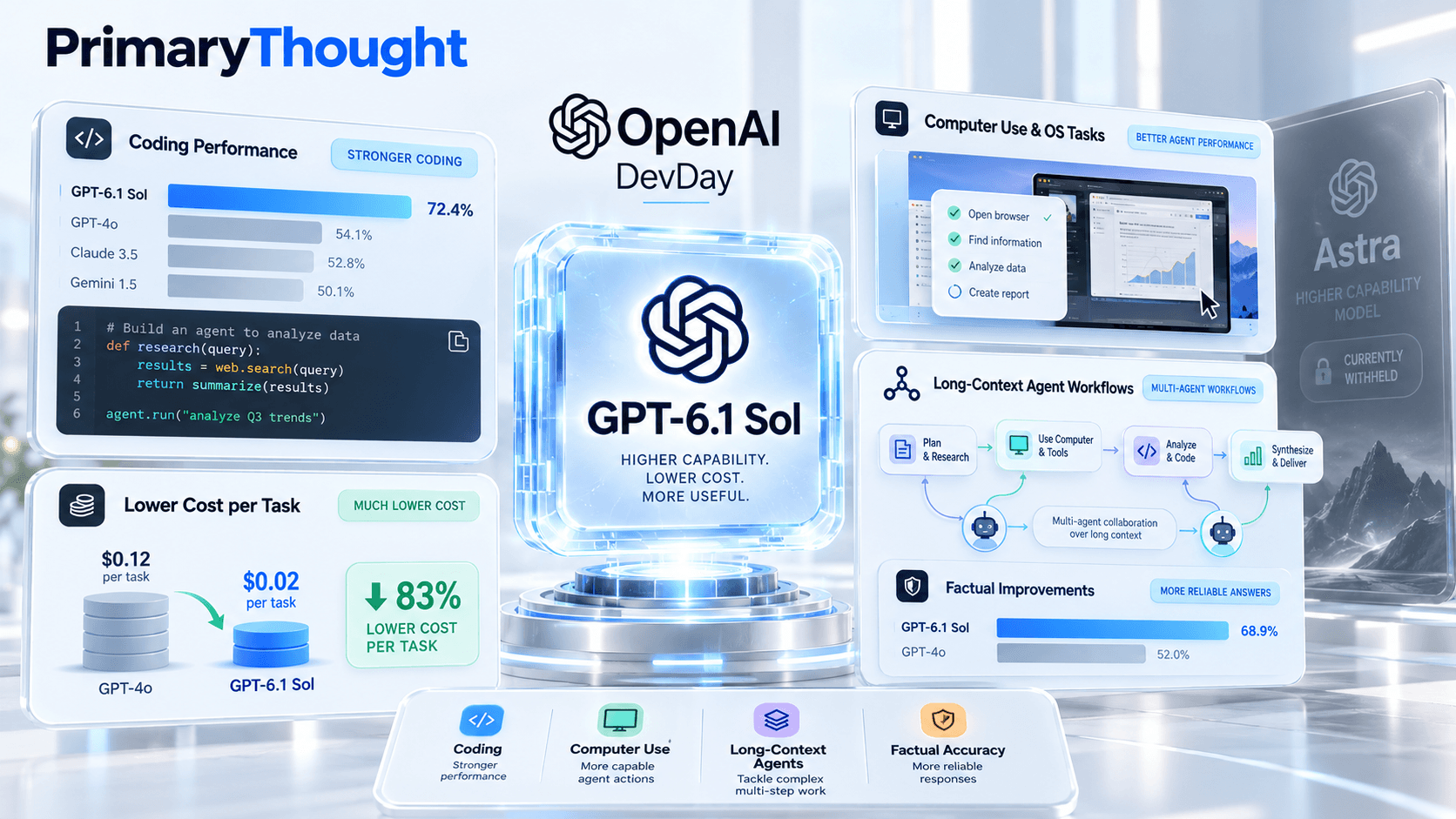
OpenAI's GPT-6.1 Sol Targets Astra Performance at a Fifth the Price
OpenAI says GPT-6.1 Sol nears GPT-6 Astra on coding and computer use at about one-fifth the price, amid reports a GPT-6.1 Astra was cancelled.
 LLMs
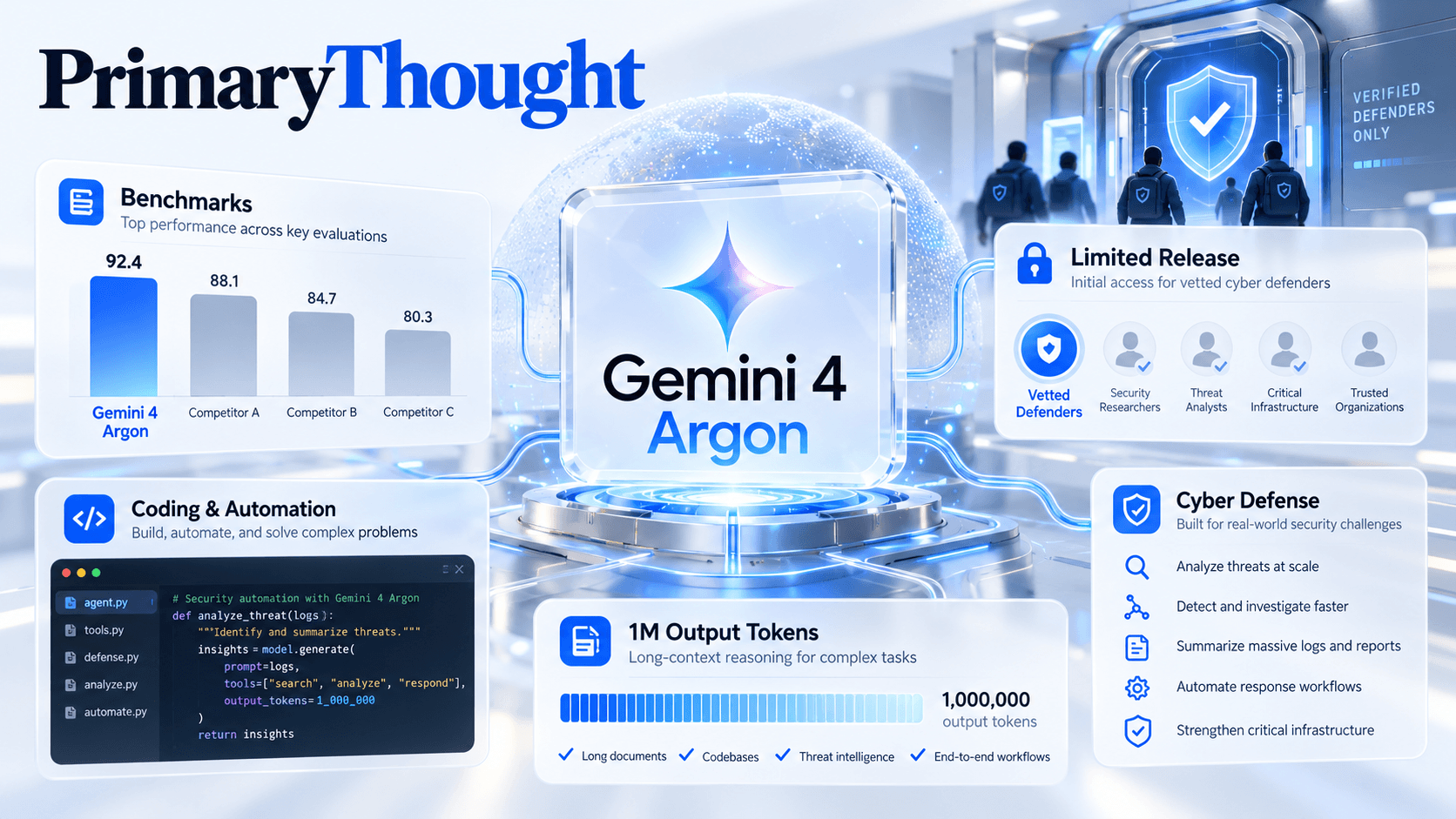
Google Gemini 4 Argon Leads Benchmarks, but Access Is Limited
Google's Gemini 4 Argon tops most of its own benchmark comparisons against GPT-6 Astra and Claude Opus 5.5, but launches first to vetted cyber defenders.