
Cognition Raises $2 Billion, Valuing Devin Maker at $48 Billion
AI coding startup Cognition has raised $2 billion at a $48 billion valuation, nearly doubling its worth in four months as its Devin coding agent approaches $900 million in annualized revenue.

Cognition, the startup behind the autonomous coding agent Devin, has raised $2 billion in a new funding round at a $48 billion valuation, according to Bloomberg. The round nearly doubles Cognition's valuation from the $26 billion it commanded just four months earlier, when it raised $1 billion in May.
Revenue nearly doubled since May
The jump in valuation is backed by rapid revenue growth. Cognition's annualized run-rate revenue climbed from about $492 million in May to nearly $900 million by the time of this round, an increase of roughly 83% in four months, according to SiliconANGLE. Enterprise customers named in reporting on the deal include Mercedes-Benz, NASA, Goldman Sachs, and Citi.
The round was led by new investors Andreessen Horowitz and Accel, joined by existing backers Founders Fund, General Catalyst, and Avenir, according to Reuters reporting carried by Investing.com. Cognition was founded in 2024 by Scott Wu.
Devin and the AI coding agent race
Cognition's flagship product, Devin, is positioned as an autonomous software engineer capable of planning, writing, testing, and deploying code with limited human oversight, rather than a simple autocomplete or chat-based coding assistant. That distinction, treating coding agents as infrastructure that enterprises deploy at scale rather than as a per-seat productivity tool, is central to how investors are now valuing the category.
TechCrunch's analysis of the round points to Cognition's revenue multiple as evidence that investors do not see AI coding as a winner-take-all market, even as competition intensifies. The comparison point is Cursor, a rival AI coding tool that was acquired by SpaceX for $60 billion in April after reaching $2 billion in annualized revenue. Cognition's new valuation implies a higher revenue multiple than Cursor commanded before that acquisition, despite Cognition's revenue base being smaller in absolute terms.
Heavy compute spending and a push toward proprietary models
Running an autonomous coding agent at enterprise scale is compute-intensive. Cognition leases a dedicated Nvidia server cluster reported to cost hundreds of millions of dollars annually, and the company's projected cash burn for 2026 is estimated at roughly $800 million, according to reporting on the round. Cognition is reportedly developing its own proprietary model, built on open-source foundations, in an effort to reduce its reliance on models from OpenAI and Anthropic that currently power parts of Devin's reasoning and code-generation capabilities.
That move mirrors a broader trend among well-funded AI application companies: as usage scales, the cost and dependency risk of running entirely on third-party foundation models becomes harder to justify, pushing companies to bring at least some model development in-house even while continuing to use frontier models for the hardest tasks.
What the round signals for AI coding tools
Cognition's revenue is projected to reach $4 billion to $5 billion on an annualized basis by the end of 2026, according to figures cited in coverage of the round, though that figure reflects run-rate projections rather than confirmed annual revenue. If accurate, it would represent explosive growth for a company founded just two years ago.
The size and speed of Cognition's valuation increase, alongside Cursor's acquisition earlier this year, suggests investors continue to see substantial room for multiple large players in AI-assisted software engineering, rather than expecting a single winner to dominate the category. With enterprise customers spanning automotive, aerospace, and financial services, Cognition's next challenge will be sustaining growth at its new scale while managing the compute costs that come with running autonomous coding agents across large organizations.
A crowded, capital-intensive category
Cognition is not operating in a vacuum. Beyond Cursor's acquisition by SpaceX, GitHub Copilot, Anthropic's own coding-focused tooling, and a wave of smaller open-source coding agents are all competing for the same enterprise engineering budgets. What differentiates Cognition's pitch, according to the reporting on this round, is Devin's framing as an autonomous agent that takes on entire engineering tasks end-to-end, rather than a completion or chat tool that assists a human engineer line by line. That distinction has let Cognition court large, process-heavy enterprises like NASA and Goldman Sachs, where the value proposition is reducing engineering headcount needs for well-scoped, repetitive tasks rather than simply making individual developers faster.
The tradeoff is cost. Running agents that can independently plan, execute, and iterate on multi-step coding tasks requires far more inference compute per task than a single autocomplete suggestion, which is reflected in Cognition's reported hundreds of millions of dollars in annual spending on leased Nvidia infrastructure. That cost structure is part of why the company is reportedly investing in its own proprietary models: at Cognition's scale of usage, even modest efficiency gains per task translate into large absolute savings and reduce exposure to pricing and availability decisions made by OpenAI and Anthropic, the same labs that supply models to some of Cognition's own competitors.
Investor confidence despite the burn rate
An $800 million estimated cash burn for 2026 would be a striking figure for most startups, but investors backing this round are evidently betting that Cognition's revenue growth trajectory, and the strategic value of owning a leading position in autonomous coding agents, justifies the spend. The presence of Andreessen Horowitz and Accel as new lead investors, layered on top of existing backers who have now committed capital across multiple rounds in a single year, suggests confidence that the AI coding agent market is still in its early expansion phase rather than a mature market where margins are already under pressure.
Frequently Asked Questions
How much did Cognition raise and at what valuation?
Cognition raised $2 billion at a $48 billion valuation, up from a $26 billion valuation just four months earlier when it raised $1 billion in May.
Who led Cognition's latest funding round?
The round was led by new investors Andreessen Horowitz and Accel, joined by existing backers Founders Fund, General Catalyst, and Avenir.
What is Devin and what does Cognition do?
Devin is Cognition's autonomous AI coding agent, designed to plan, write, test, and deploy code with limited human intervention. Cognition was founded in 2024 by Scott Wu.
How much revenue does Cognition generate?
Cognition's annualized run-rate revenue grew from about $492 million in May to nearly $900 million by September, roughly an 83% increase in four months.
How does Cognition's valuation compare to rival Cursor?
Cursor was acquired by SpaceX for $60 billion in April 2026 after reaching $2 billion in annualized revenue. Cognition's new $48 billion valuation implies a higher revenue multiple than Cursor commanded before that deal.
Related articles
 Tools & Frameworks
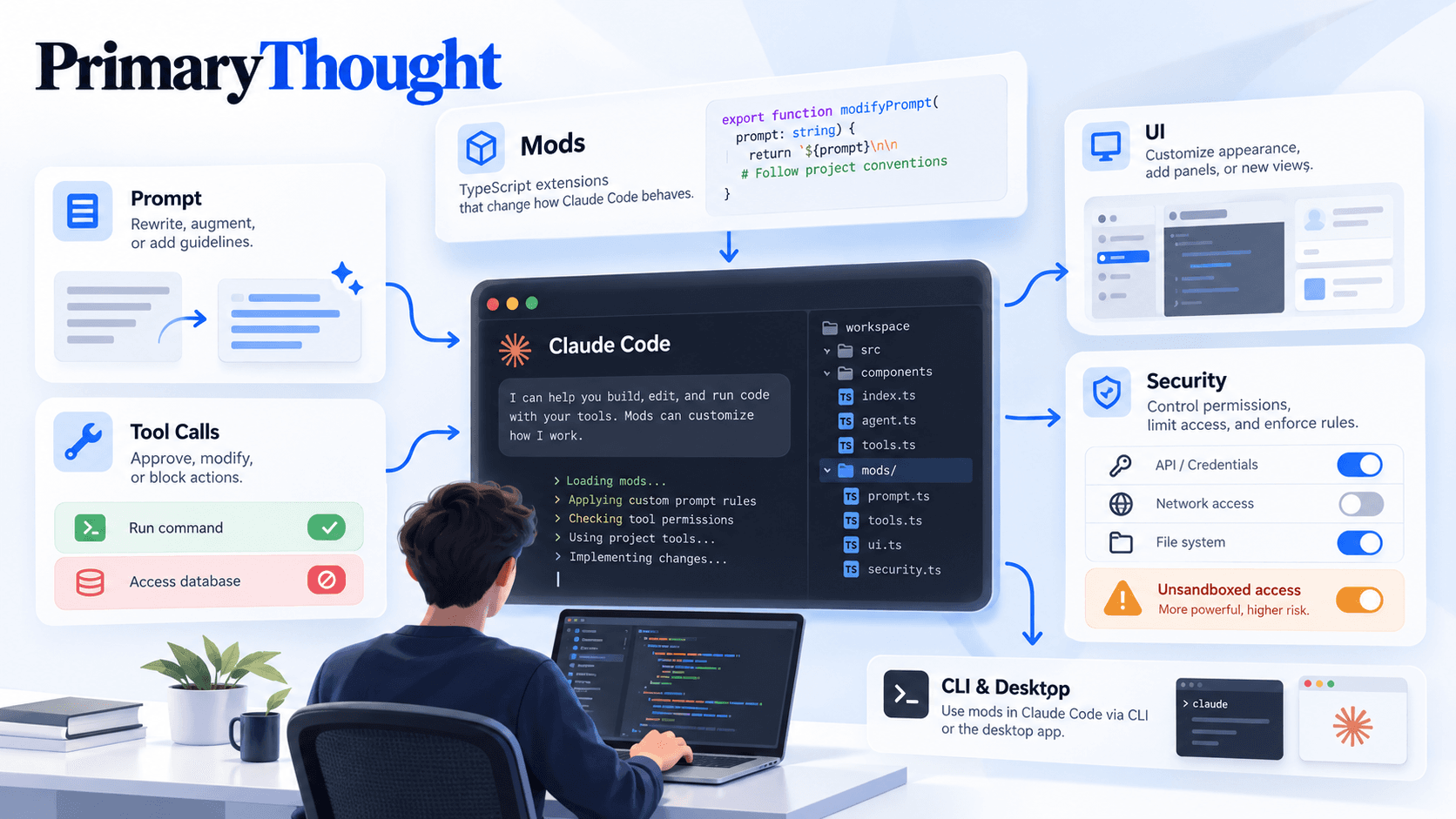
Claude Code Adds Mods to Rewrite the Agent's Behavior and UI
Anthropic's Claude Code 2.1.287 adds TypeScript mods that can rewrite prompts, intercept tool calls and replace UI. They run unsandboxed.
 Tools & Frameworks
OpenAI Opens Parts of Codex Harness to Developers via Agents API
OpenAI's Agents API beta gives developers a managed Codex harness, while DevDay added hosted computer use and brought reports that parts of the harness were open-sourced.
 Tools & Frameworks
Ando Exits Stealth With $20M to Build a Slack Rival for Humans and AI Agents
Backed by $20 million from Accel, Index Ventures, and Emergence Capital, Ando is a team messaging platform built so AI agents can join channels, message colleagues, and coordinate work as full participants rather than as add-on integrations.