
Ando Exits Stealth With $20M to Build a Slack Rival for Humans and AI Agents
Backed by $20 million from Accel, Index Ventures, and Emergence Capital, Ando is a team messaging platform built so AI agents can join channels, message colleagues, and coordinate work as full participants rather than as add-on integrations.
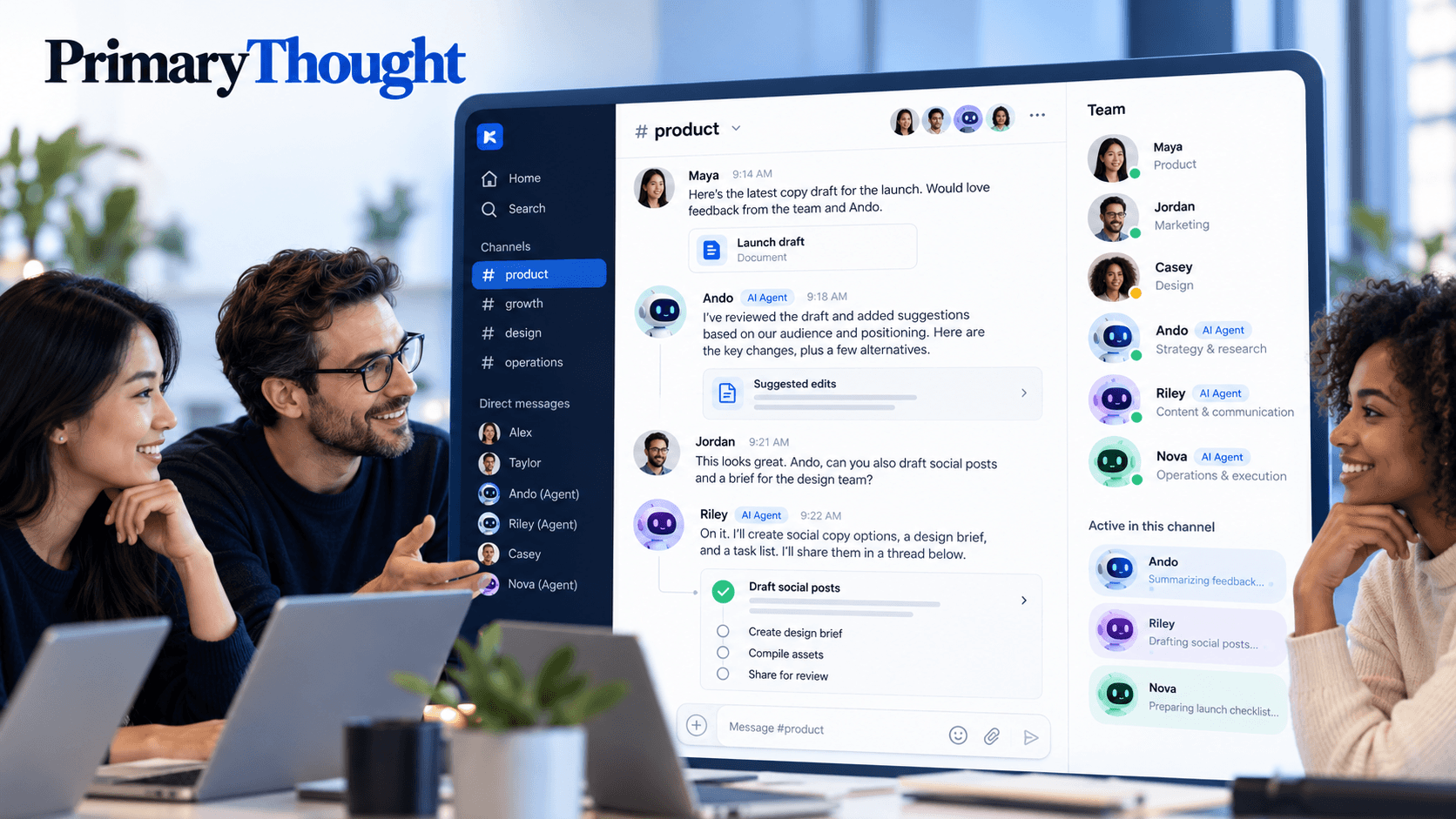
A new startup called Ando emerged from stealth on Thursday, September 24, with $20 million in pre-seed and seed funding and a pitch that inverts the usual model for bringing AI into workplace chat: instead of adding a bot to Slack, Ando is a full messaging platform built from the ground up for humans and AI agents to work side by side, according to reporting from Yahoo Tech.
The San Francisco company is led by CEO Sara Du, a second-time founder who previously built the enterprise API platform Alloy Automation and is a Thiel Fellow. The funding round was led by Accel and Index Ventures, with participation from Emergence Capital.
Why Ando Was Built
Du's pitch for Ando grew directly out of a problem she says she kept running into while helping other companies wire AI agents into their existing tools during 2025. Teams wanted their agents to live inside Slack alongside human employees, but getting messages to flow correctly between systems, supplying agents with the right context for a conversation, and controlling the computing costs of having an LLM read every message in a channel made the whole setup awkward and expensive. Her conclusion, as she put it, was that conventional messaging platforms were “built for a world that was starting to pass us by”, one where AI agents were assumed to be occasional add-ons rather than regular participants in day-to-day team communication.
How Ando Treats AI Agents Differently
Ando's design tries to close that gap by treating agents as first-class citizens of the workspace rather than integrations bolted onto a human-first product. Every agent in Ando gets its own identity and its own inbox, the same as a human employee would. Agents can browse and join channels on their own, participate in group direct messages, and even join live calls that include automatic transcription. Agents in Ando aren't limited to responding when explicitly tagged. The platform is built so they can pick up relevant work, follow conversations across channels, and initiate messages to human colleagues without requiring prior approval for each interaction.
Agents Can Message Employees Proactively
That last point is a significant design choice. Giving software agents the ability to proactively message employees, rather than only replying when summoned, could improve coordination but may also create concerns around noisy, unwanted, or poorly judged outreach. Enterprise IT and security teams evaluating the platform will need to weigh those trade-offs carefully.
Du has framed the goal less as automation for its own sake and more as making agents behave like genuine colleagues. As she described it, agents should be able to “participate in shared conversations where work gets coordinated, understand decisions, ask colleagues questions, build on other agents' work, and involve humans for judgment calls.”
Ando Wants to Replace Slack and Teams
Ando also markets itself explicitly as a full alternative to Slack or Microsoft Teams rather than a companion tool that sits alongside them, which means it's asking companies to consider replacing their core communication layer rather than layering agent capabilities on top of an existing one. That's a considerably higher bar to clear than a typical AI-agent add-on, since it requires winning over not just AI-forward teams but everyone in an organization who currently relies on Slack or Teams for ordinary human-to-human communication.
Why Agent-Native Messaging Is Emerging Now
The launch comes amid a broader wave of startups building infrastructure for workplaces where AI agents are active participants rather than occasional tools. That category has grown as companies deploy more autonomous agents for coding, research, and operational tasks.
Ando's view is that as those agents become more common inside organizations, the communication layer connecting humans and agents should be designed for that use from the start rather than added later. The company is betting that this could become an important part of the next generation of workplace software.
Can Ando Win Over Enterprise Teams?
Whether enterprises are ready to rely on a young startup for core workplace communication, especially one asking them to move away from Slack or Teams and allow AI agents to message employees proactively, remains to be seen. With $20 million in funding and its public launch now underway, Ando's next challenge is proving that agent-native messaging is something companies want as core infrastructure rather than as an experimental feature added to the tools they already use.
Frequently Asked Questions
What is Ando?
Ando is a team messaging platform, launched on September 24, 2026, designed as a full alternative to Slack or Microsoft Teams that lets both humans and AI agents participate as full members of channels, direct messages, and calls.
How much funding has Ando raised, and from whom?
Ando has raised $20 million in pre-seed and seed funding, led by Accel and Index Ventures, with participation from Emergence Capital.
Who founded Ando?
Ando was founded by CEO Sara Du, a second-time founder who previously built the enterprise API platform Alloy Automation and is a Thiel Fellow.
How do AI agents work inside Ando?
Agents in Ando get their own individual identities and inboxes. They can browse and join channels autonomously, participate in group direct messages, join live transcribed calls, and initiate messages to human colleagues without needing prior approval for each interaction.
How is Ando different from adding an AI bot to Slack?
Rather than bolting an AI integration onto an existing human-first chat tool, Ando was built from scratch to treat agents as first-class participants with the same standing as human team members, which the company argues avoids the context-sharing and cost problems of retrofitting agents into legacy messaging platforms.
Related articles
 Tools & Frameworks
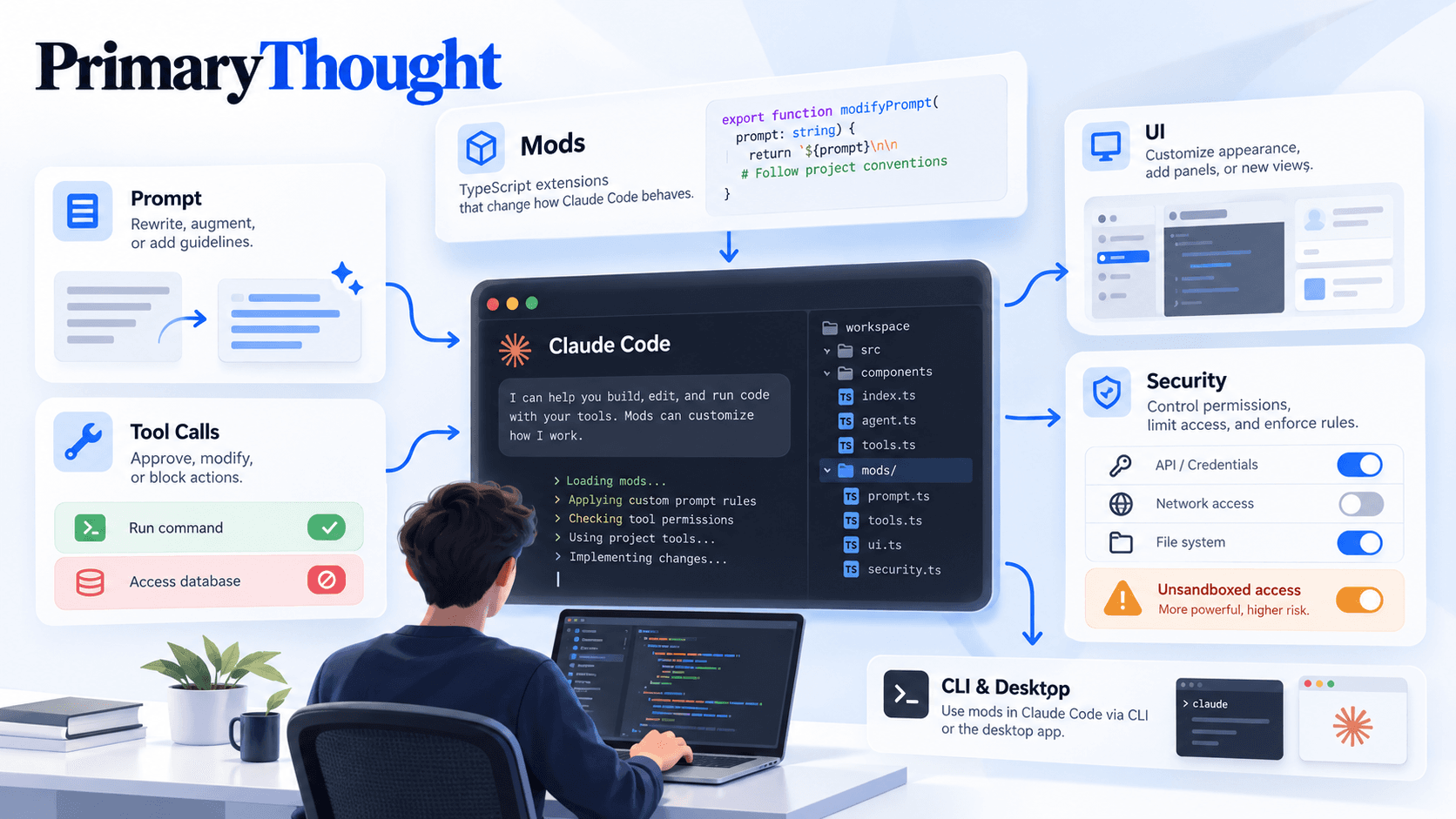
Claude Code Adds Mods to Rewrite the Agent's Behavior and UI
Anthropic's Claude Code 2.1.287 adds TypeScript mods that can rewrite prompts, intercept tool calls and replace UI. They run unsandboxed.
 Tools & Frameworks
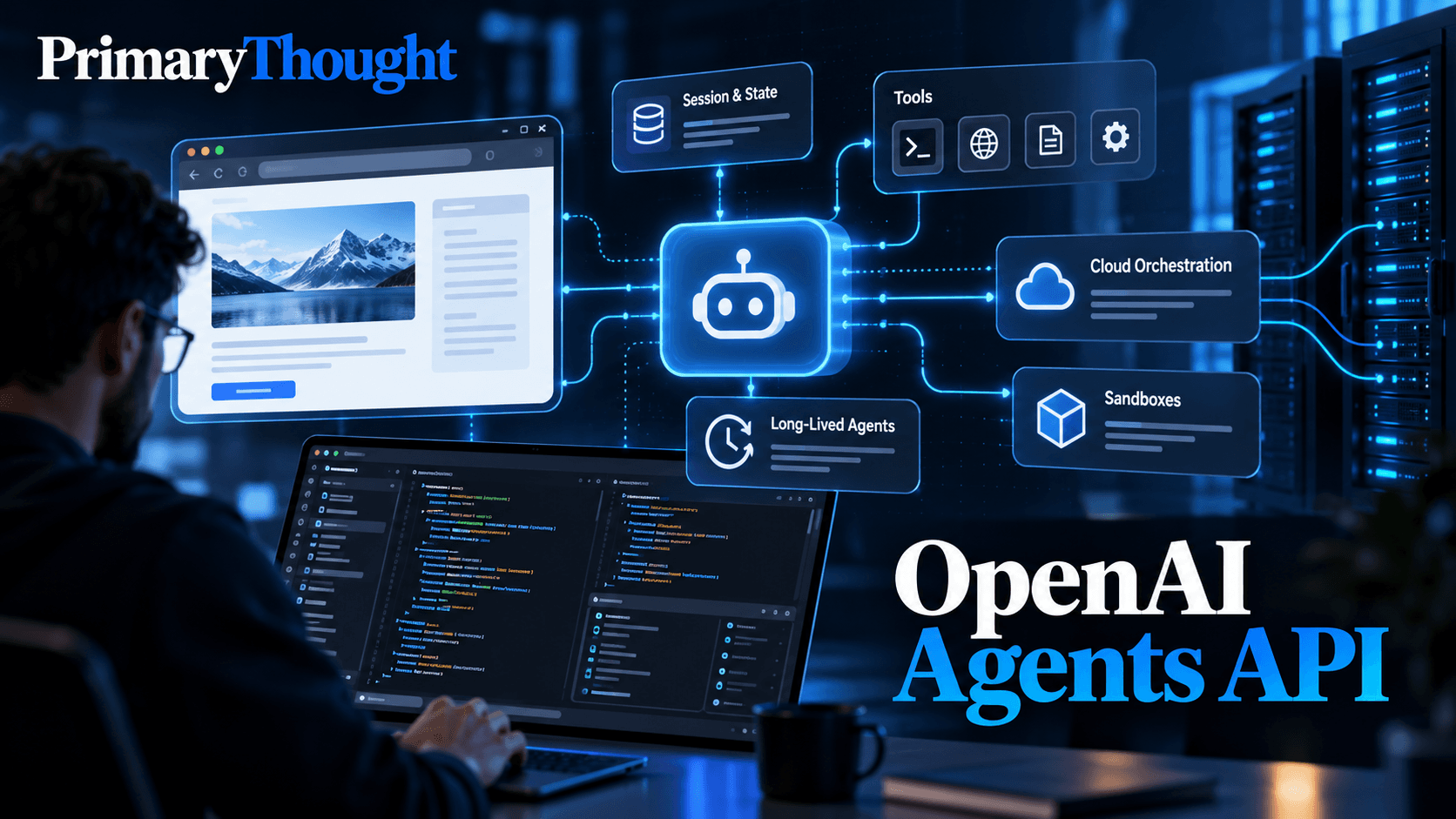
OpenAI Opens Parts of Codex Harness to Developers via Agents API
OpenAI's Agents API beta gives developers a managed Codex harness, while DevDay added hosted computer use and brought reports that parts of the harness were open-sourced.
 Tools & Frameworks
Google Upgrades Gemini's Managed Agent Harness With Files and Credentials APIs
The new antigravity-preview-09-2026 harness cuts output tokens on file edits by 40% and adds two APIs for handling files and secrets in autonomous agent workflows, ahead of an October 5 deprecation of the prior version.