
Google Upgrades Gemini's Managed Agent Harness With Files and Credentials APIs
The new antigravity-preview-09-2026 harness cuts output tokens on file edits by 40% and adds two APIs for handling files and secrets in autonomous agent workflows, ahead of an October 5 deprecation of the prior version.
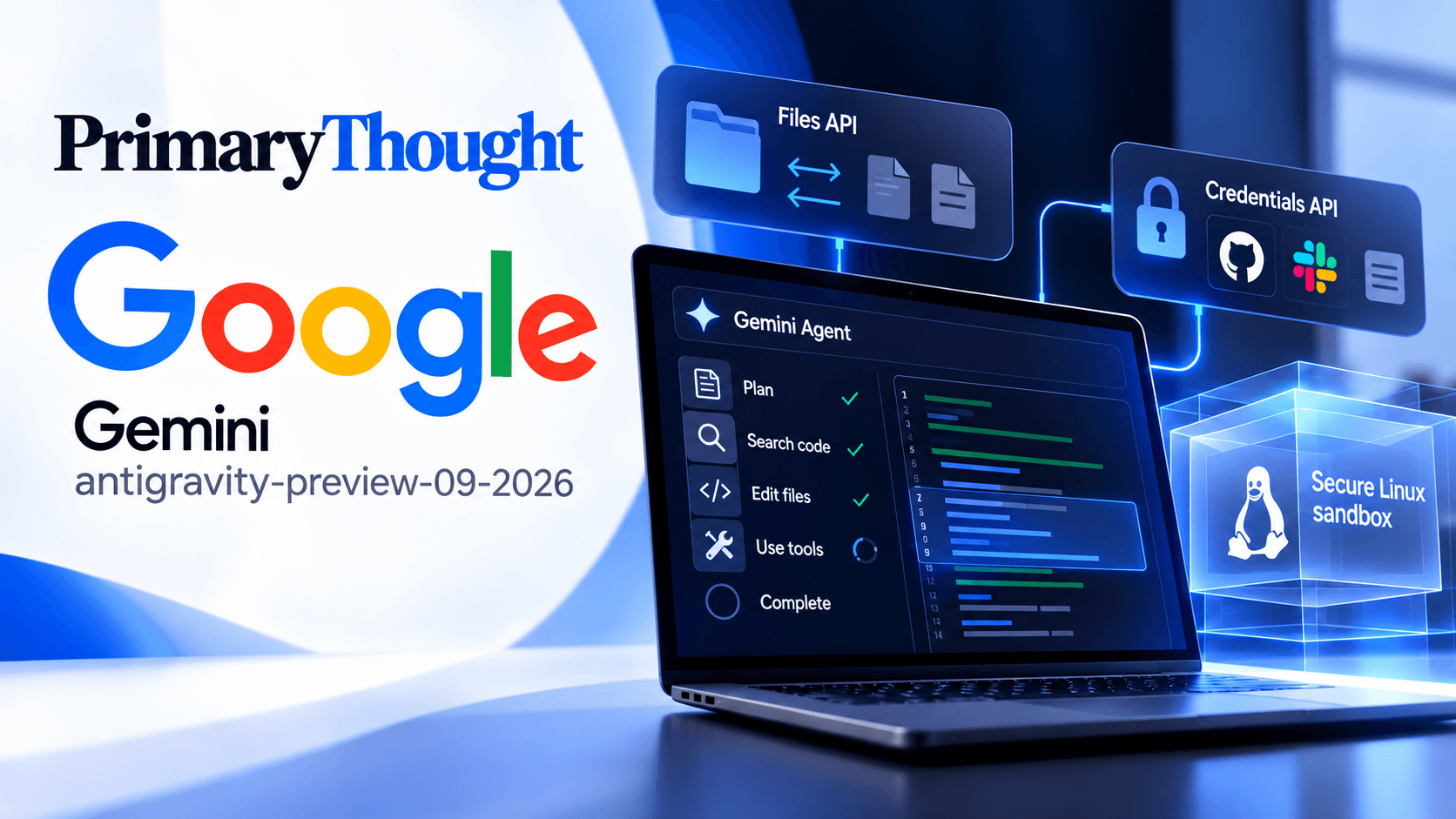
Google has released an updated runtime harness for its Gemini API managed agents, called antigravity-preview-09-2026, bringing efficiency improvements and two new developer-facing APIs aimed at making autonomous, multi-step agent workflows more practical to run in production.
According to Google's official documentation, the new harness runs on the company's Gemini 3.8 Flash model and executes inside what Google describes as a secure, isolated Linux sandbox that it hosts on behalf of developers. It's built for autonomous, multi-step workflows rather than single-turn chat completions.
What changed in the harness
Google lists three specific runtime improvements in the September update: improved prompt caching, native code search tools, and more efficient line-range file editing. This means the agent can modify specific sections of a file without needing to resend or reprocess the entire document.
Those changes translate into measurable gains Google reported in its own internal testing, as covered by Investing.com:
40% fewer output tokens consumed on file-change operations, compared to the prior harness
Up to 6% higher task completion on multi-turn software engineering and research tasks
Up to 16% higher cache hit rates on long conversations and research-style sessions
Google has not published independent, third-party verification of these figures. The results come from the company’s own internal testing.
Two new APIs: Files and Credentials
Alongside the harness update, Google introduced a Files API for moving data into and out of the agent's sandbox environment, and a Credentials API for authenticating to external services. That includes remote MCP servers and third-party APIs such as GitHub or Slack, without exposing the underlying secret or token directly to the model.
Instead, the agent references a stored credential, and Google's egress proxy injects the actual secret when the request is made. This means a credential can be rotated without changing the trigger or workflow that references it.
The approach keeps long-lived secrets out of the model's context and lets the sandboxed infrastructure handle authentication instead.
Technical specs
According to Google's documentation, the antigravity-preview-09-2026 harness supports an input context window of 1,048,576 tokens (with automatic compaction kicking in around the 135,000-token mark) and an output limit of 65,536 tokens. It accepts text and image input and produces text output, and is accessed through Google's Interactions API and AI Studio.
Pricing and migration timeline
Google says pricing for the new harness follows the same pay-as-you-go model, with charges based on the underlying Gemini token usage and the tools the agent uses during a run. Free-tier projects continue to receive free rate limits and usage quotas.
Developers on the older harness have a firm deadline to move: Google has confirmed that antigravity-preview-05-2026 will be deprecated on October 5, 2026, after which requests to that version will be automatically redirected to the new September harness.
Why it matters
The update is aimed squarely at a practical pain point for teams running agents in production: long-horizon coding and research agents tend to burn through tokens re-reading and re-writing files, and often need access to credentials for services outside the model's own sandbox. By tightening file-editing efficiency and formalizing a secrets-handling pattern, Google is positioning its managed agent platform as a more turnkey option for teams that would otherwise need to build that plumbing themselves on top of a raw model API.
Frequently Asked Questions
What is antigravity-preview-09-2026?
It's an updated runtime harness for Google's Gemini API managed agents, running on the Gemini 3.8 Flash model, designed for autonomous multi-step agent workflows executed in a secure sandbox.
What performance improvements does the new harness offer?
Google reports 40% fewer output tokens on file-change operations, up to 6% higher task completion on multi-turn software engineering and research tasks, and up to 16% higher cache hit rates on long sessions, based on its own internal testing.
What do the new Files API and Credentials API do?
The Files API manages moving data into and out of the agent's sandbox environment. The Credentials API lets agents securely authenticate to external services like GitHub or Slack via stored, rotatable credentials, without exposing the underlying secret to the model.
When is the older harness being deprecated?
Google says antigravity-preview-05-2026 will be deprecated on October 5, 2026, after which requests will automatically redirect to antigravity-preview-09-2026.
Did pricing change with the new harness?
No, Google says pricing for antigravity-preview-09-2026 is unchanged from the prior version, with agents billed based on underlying Gemini token usage and tool calls.
Related articles
 Tools & Frameworks
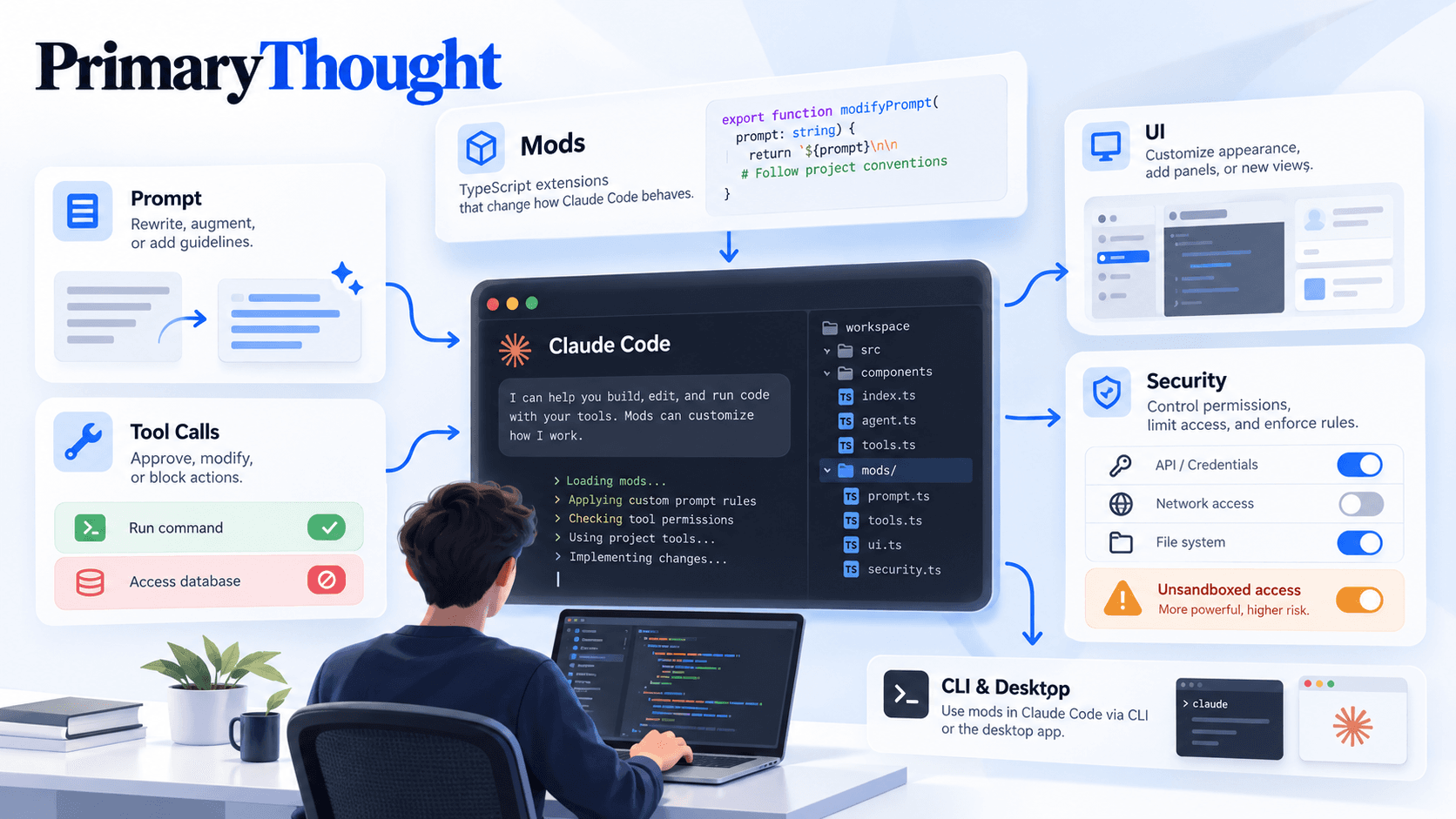
Claude Code Adds Mods to Rewrite the Agent's Behavior and UI
Anthropic's Claude Code 2.1.287 adds TypeScript mods that can rewrite prompts, intercept tool calls and replace UI. They run unsandboxed.
 Tools & Frameworks
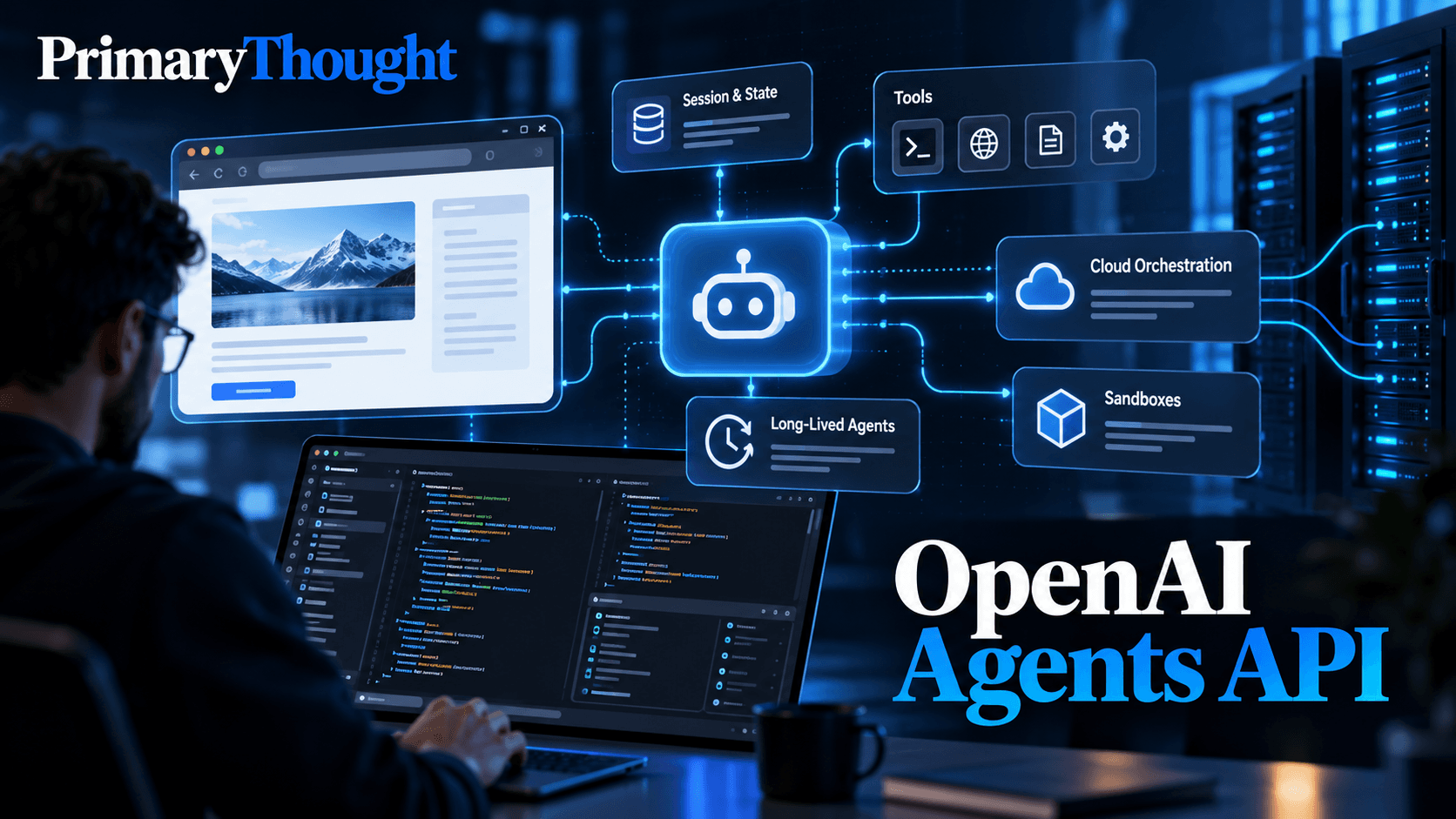
OpenAI Opens Parts of Codex Harness to Developers via Agents API
OpenAI's Agents API beta gives developers a managed Codex harness, while DevDay added hosted computer use and brought reports that parts of the harness were open-sourced.
 Tools & Frameworks
Ando Exits Stealth With $20M to Build a Slack Rival for Humans and AI Agents
Backed by $20 million from Accel, Index Ventures, and Emergence Capital, Ando is a team messaging platform built so AI agents can join channels, message colleagues, and coordinate work as full participants rather than as add-on integrations.