
xAI Launches Grok 4.7, Its Most Capable Model Yet for Coding
xAI has released Grok 4.7, a flagship model built for longer coding and engineering tasks, with a 500,000-token context window, significant benchmark gains over Grok 4.6, and unchanged pricing.
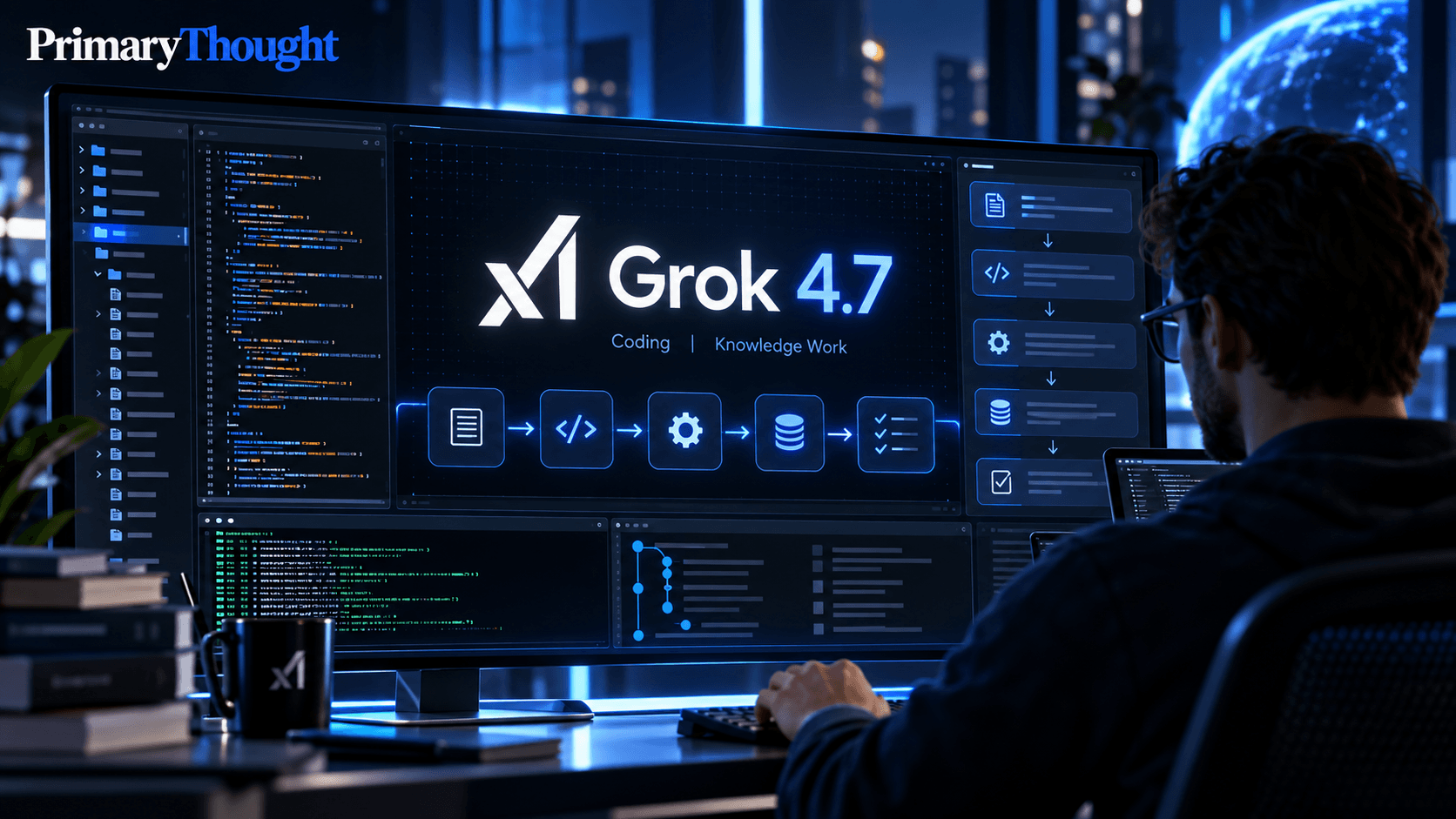
xAI released Grok 4.7 on September 21, positioning it as a flagship model focused on software development, agentic tasks, and professional knowledge work. The launch was covered by Crowdfund Insider and Yahoo Tech, both of which detailed the model's benchmark improvements over its predecessor, Grok 4.6.
What Changed Under The Hood
According to xAI, Grok 4.7 uses a larger base model than Grok 4.6 and received a longer reinforcement-learning training run. The training focused more heavily on difficult problems that can take hours to complete, rather than short, single-turn prompts. xAI says the model is also better at checking its own work and handling longer context.
The model supports a 500,000-token context window, along with text and image inputs, web search, function calling, and code execution. That larger working context is useful for tasks such as reviewing extensive codebases, following long conversations, and handling multi-step engineering work in one session.
Benchmark Gains
xAI reported gains across several coding and engineering benchmarks compared with Grok 4.6:
CursorBench 4.0: 46.3%, up from 40.4%
DeepSWE v1.1 (high effort): 71.0%, up from 65.2%
Terminal-Bench 4.0: 37.6%, up from 20.3%
EEBench (electrical engineering): 64.0%, up from 53.0%
AA Briefcase v1.1: 1,657, up from 1,546
The biggest jump comes on Terminal-Bench, where Grok 4.7 rose from 20.3% to 37.6%. The benchmark focuses on longer-running terminal tasks, making the result particularly relevant to coding agents that need to use tools and work through several steps rather than simply generate a code snippet.
Pricing and Availability
Despite the performance gains, xAI kept standard Grok 4.7 pricing at $2 per million input tokens and $6 per million output tokens, the same base rates as Grok 4.6. A faster version is also available at twice the token price and roughly twice the output speed for users who need lower latency.
Grok 4.7 is available in Cursor, xAI's own coding agent Grok Build, and through the xAI API. It is also supported through third-party coding tools, model gateways, and cloud platforms. The faster Grok 4.7 variant is limited to Cursor and Grok Build.
Safety Posture
xAI says Grok 4.7 uses an entirely new safeguard stack and is its strongest model so far on refusal quality and jailbreak resistance. The company also says it has tried to keep refusal rates low for legitimate cybersecurity and engineering work, while blocking risky or malicious requests.
The emphasis on safety comes as xAI continues to refine how Grok handles dual-use requests, jailbreak attempts, and other high-risk prompts. Its published safety framework says the company tests models for adversarial attacks and applies stronger safeguards in areas such as cybersecurity and biological risk.
Positioning Grok as an Engineering Tool, Not Just a Chatbot
The benchmarks xAI highlighted, including Terminal-Bench, DeepSWE, EEBench, and CursorBench, show a clear focus on coding, engineering, and longer-running tasks. Grok 4.7 is being positioned for work that involves terminals, tools, large codebases, and several steps, rather than only short conversational exchanges.
That fits a broader trend across major AI labs. xAI, OpenAI, Anthropic, and Google are all putting more emphasis on models that can use tools, complete longer tasks, and support professional workflows alongside traditional chat.
Grok Build gives xAI its own product for showing what Grok 4.7 can do in coding and engineering tasks. Availability in Cursor also puts the model directly in front of developers who already use AI-assisted coding tools, while API and third-party platform support extends its reach across a wider developer audience.
Where It Sits Competitively
Grok 4.7 arrives during a busy month for frontier AI releases. Anthropic released Claude Opus 5.5, OpenAI rolled out GPT-6 Sol and Luna, and Google introduced Gemini 3.8 Flash during the same September period.
Yahoo Tech described Grok 4.7 as a meaningful improvement over Grok 4.6, particularly for coding and longer-running tasks. At the same time, the model still trails some competing systems on selected benchmarks, showing that xAI has narrowed the gap without leading across every test.
For developers already using Cursor or Grok Build, the combination of stronger benchmark results and unchanged standard pricing makes Grok 4.7 a straightforward upgrade from Grok 4.6. xAI kept pricing at $2 per million input tokens and $6 per million output tokens.
Frequently Asked Questions
When did xAI release Grok 4.7?
xAI launched Grok 4.7 on September 21, 2026, positioning it as a flagship model for coding and professional knowledge work.
How much does Grok 4.7 cost to use via the API?
Standard pricing is $2 per million input tokens and $6 per million output tokens, unchanged from Grok 4.6. A faster serving tier is available at double the output speed and double the price.
What is Grok 4.7's context window size?
Grok 4.7 supports a 500,000-token context window and handles text and image input, tool use, web search, and code execution.
How much better is Grok 4.7 than Grok 4.6 on coding benchmarks?
Gains varied by benchmark: CursorBench 4.0 rose from 40.4% to 46.3%, DeepSWE v1.1 (high effort) from 65.2% to 71.0%, and Terminal-Bench 4.0 nearly doubled from 20.3% to 38.0%.
Where is Grok 4.7 available?
It's live now in Cursor, xAI's Grok Build coding agent, and the xAI API, with additional third-party coding harnesses, model routers, and cloud providers expected to add support in the coming weeks.
Related articles
 LLMs
Mistral Large 4 Enters Preview, Open Weights Due in October
Mistral's trillion-parameter multimodal model is live in preview, with open weights promised by month-end. The benchmarks are all self-reported.
 LLMs
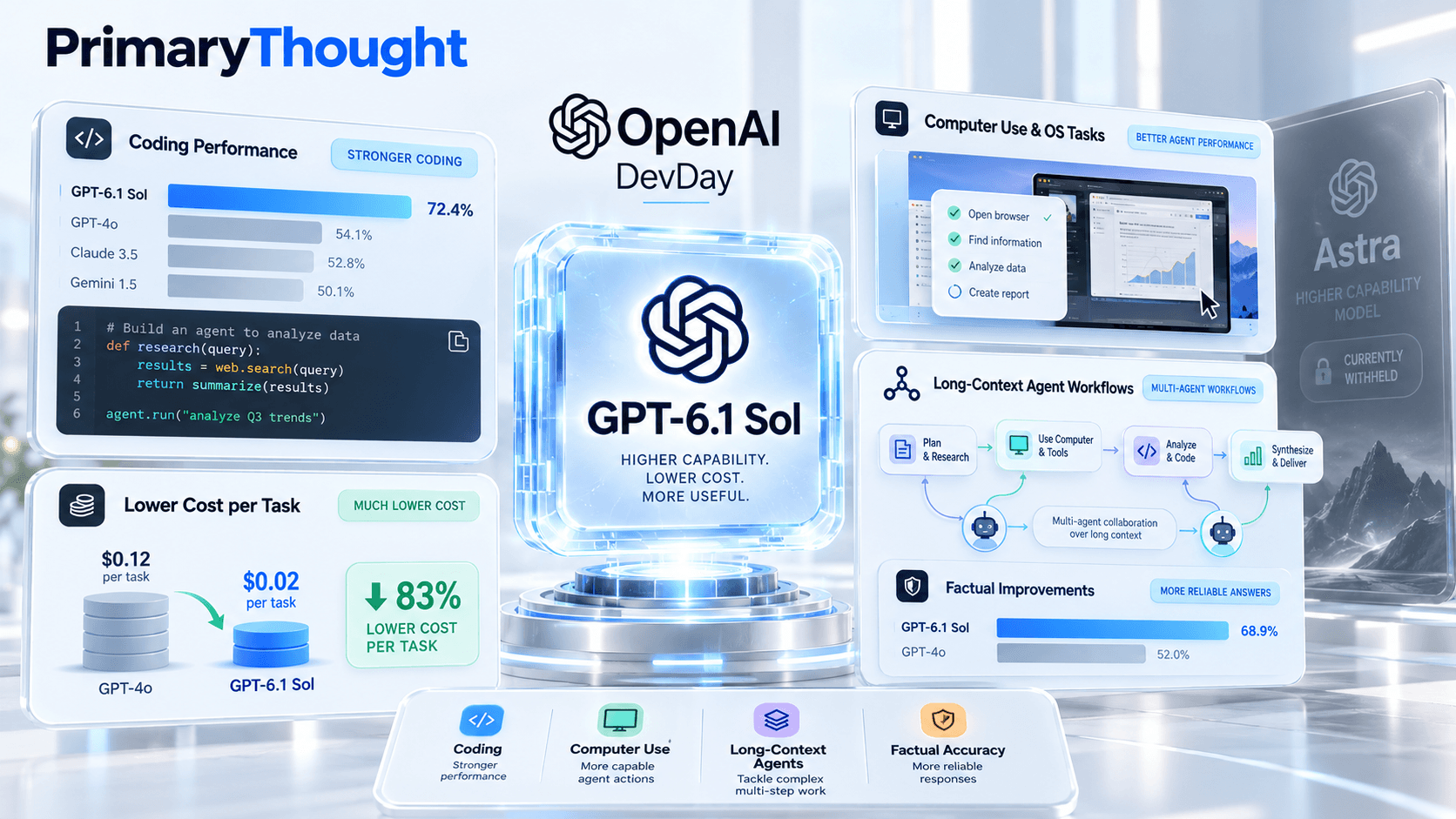
OpenAI's GPT-6.1 Sol Targets Astra Performance at a Fifth the Price
OpenAI says GPT-6.1 Sol nears GPT-6 Astra on coding and computer use at about one-fifth the price, amid reports a GPT-6.1 Astra was cancelled.
 LLMs
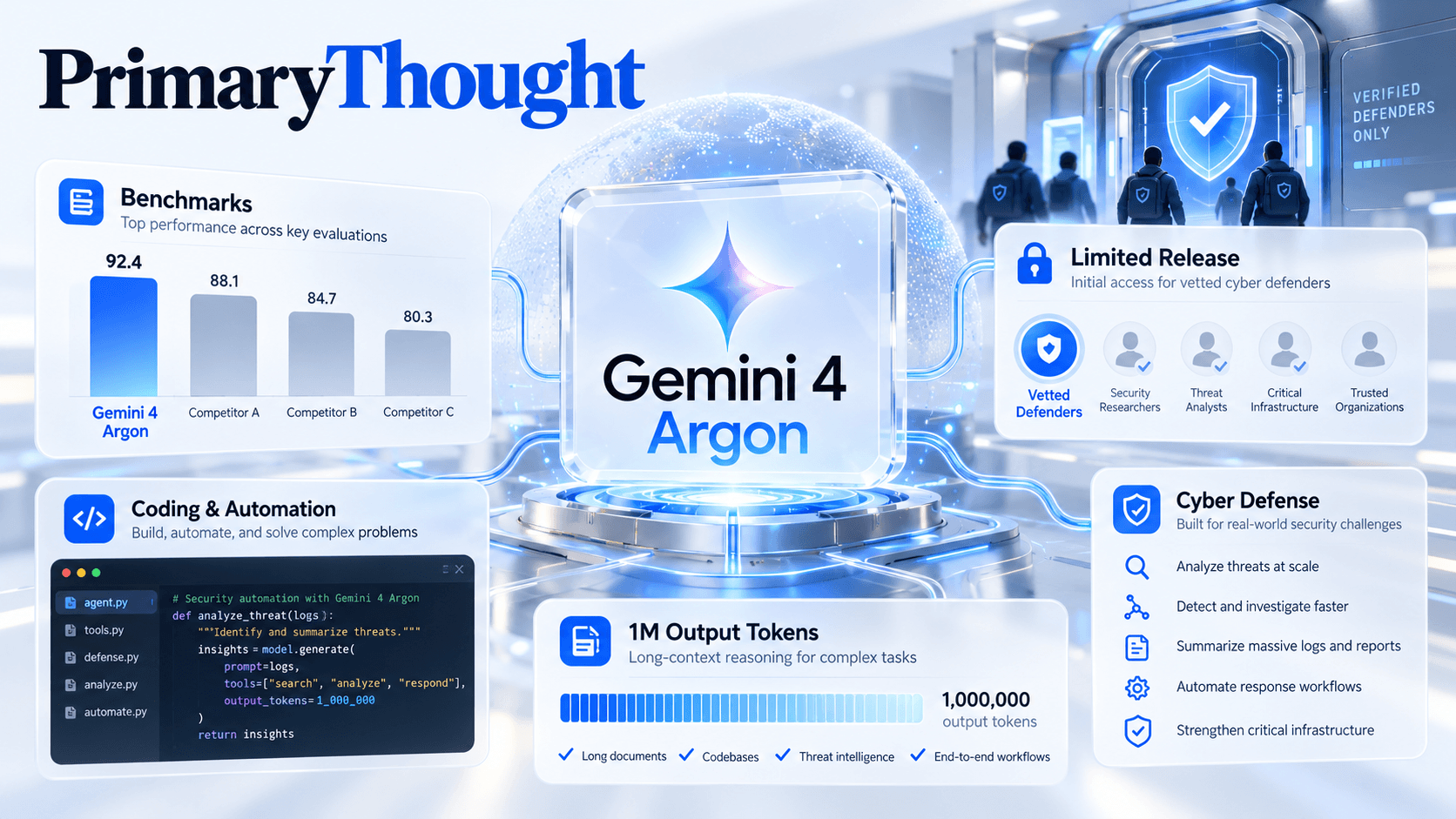
Google Gemini 4 Argon Leads Benchmarks, but Access Is Limited
Google's Gemini 4 Argon tops most of its own benchmark comparisons against GPT-6 Astra and Claude Opus 5.5, but launches first to vetted cyber defenders.