
DeepSeek Releases Six Open-Source Tools for Huawei Ascend
DeepSeek released six open-source components, including TileLang and DeepGEMM, to make Huawei Ascend chips easier to use for training and inference.
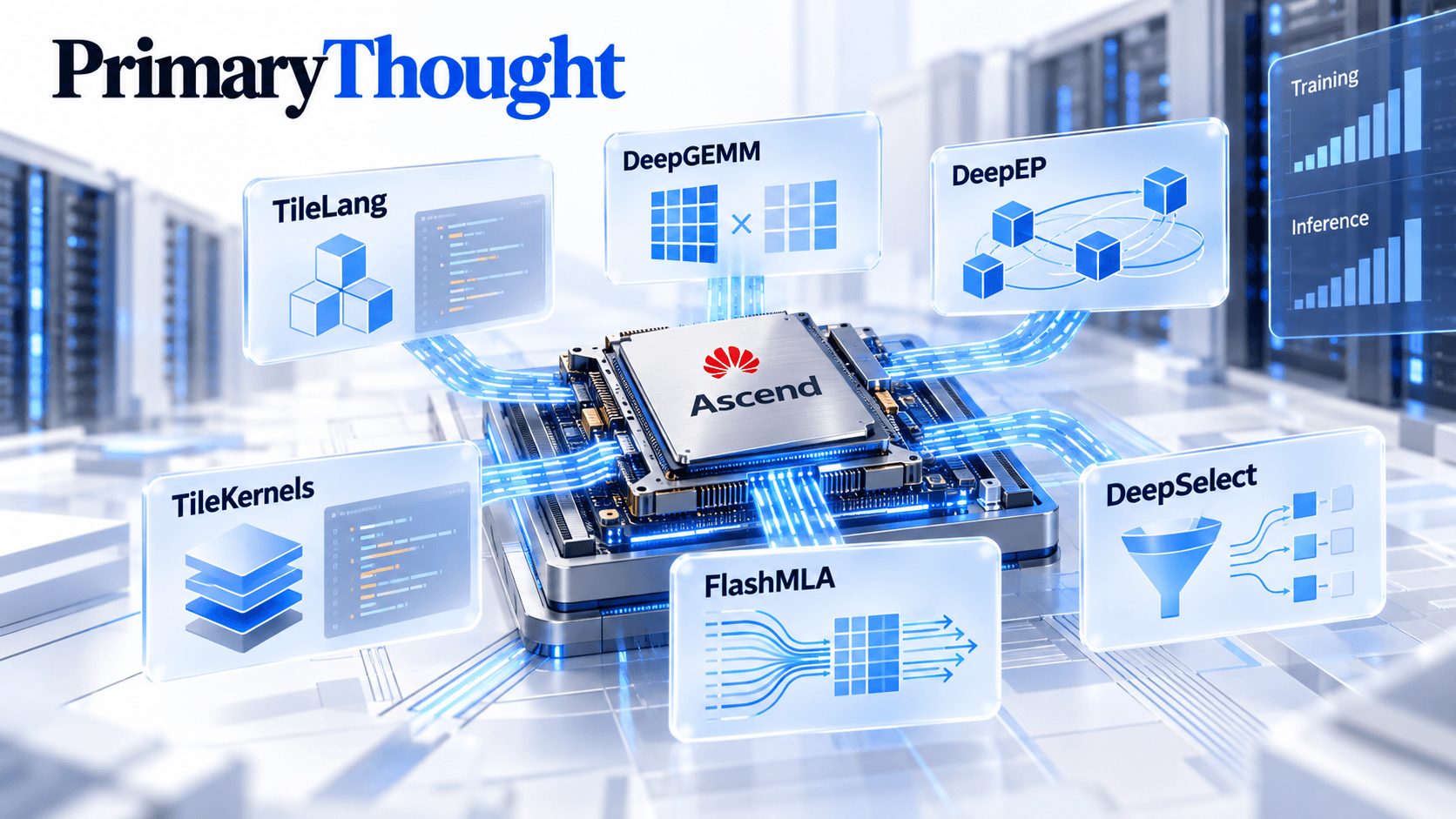
DeepSeek has released six open-source software components aimed at making Huawei's Ascend accelerators easier to use for large-model training and inference. The release, described by DQ India and analyzed by The Neuron, is less about a new model and more about the underlying software infrastructure: the kernels, communication libraries, and programming tools that determine how efficiently expensive AI hardware performs.
For teams watching how the AI hardware market could diversify beyond Nvidia, the release offers a useful test of how much of the performance gap comes down to software.
What Was Released
According to DQ India, the six components are TileLang, DeepGEMM, DeepEP, TileKernels, FlashMLA, and DeepSelect. TileLang is described as a high-level programming model for writing AI kernels (small, performance-critical routines that run on an accelerator). DeepGEMM handles matrix operations, which account for much of the computation in transformer models.
DeepEP manages distributed communication for large-model workloads. It handles data exchange between chips, which can become a bottleneck when a model is split across many devices. TileKernels covers vector computation and memory access, FlashMLA supports DeepSeek's attention architecture, and DeepSelect handles data filtering.
The Neuron, which names fewer components, offers additional detail on how the tools are packaged. It says DeepGEMM-Ascend ports optimized matrix-multiplication kernels to Huawei's platform while keeping APIs consistent, and that TileKernels lets developers choose between Nvidia and Ascend backends through a unified Python interface. It also notes that TileLang-Ascend was open-sourced in September 2025, so part of this release builds on earlier work.
Why the Software Layer Matters
Efficiently training and serving large models depends on kernels tuned for specific chips. On Nvidia hardware, an established ecosystem of libraries and tools handles much of this work. On newer platforms, teams often have to write kernels manually in vendor-specific languages, which takes time and requires specialized expertise. The Neuron identifies this additional software work as one of the costs of choosing Huawei.
The main difference here is the portability layer. If a developer writes kernels in TileLang or calls TileKernels through a common interface, the same code can target different backends. That could make it easier for teams to run some workloads on Ascend while keeping others on Nvidia. It could also reduce the amount of chip-specific code they need to maintain.
The performance claims
DQ India reports benchmark figures that it labels as project-published rather than independently tested. Per those figures, TileLang-Ascend reaches about 98 percent of the performance of hand-written Ascend C on general matrix multiplication workloads, about 96 percent on vector operators and about 95 percent on attention. If accurate, that would mean a higher-level language gives up only a few percent against the lowest-level approach, which is what makes such languages attractive in the first place.
These numbers deserve caution. They are kernel-level measurements chosen by the project authors, and they do not show how a full training run or a production inference service behaves. End-to-end throughput depends on scheduling, memory use, communication overlap, and failure handling, none of which a single kernel benchmark captures. The Neuron makes the same point, calling for independent end-to-end tests and real adoption by labs outside DeepSeek and Huawei as the evidence that would matter.
Hardware and collaboration
DQ India says the work extends beyond model compatibility into foundational infrastructure, and that the companies jointly developed a supernode configuration using 128 Ascend 950 chips, addressing both computation and communication optimization. A supernode is a tightly connected group of accelerators designed to behave like one large system, which is the setting in which communication libraries such as DeepEP earn their keep, especially for mixture-of-experts models that route tokens between devices.
The Neuron adds a supply-side caveat. It reports that Huawei said demand for its AI computing equipment exceeded what it could currently supply inside China about two weeks earlier. Better software does not solve a shortage of chips, and The Neuron argues that a technically successful port can still be an unattractive business decision if everything around it becomes more expensive.
What it means for ML teams
For engineers who train or serve models, the practical question is how much of their existing code would need to change. A common kernel interface suggests that model code written against high-level operators could move between backends with limited edits, while custom kernels would still need porting. Teams that depend on unusual operators, custom attention variants, or bespoke communication patterns should expect the most work. Those using standard components such as dense matrix multiplication and common attention layouts are likeliest to benefit first. In every case, the sensible approach is to benchmark a representative workload, including failure recovery and long runs, before drawing conclusions from published kernel numbers.
What DeepSeek itself concedes
DQ India quotes DeepSeek as stating that a simpler programming model does not by itself make TileLang an alternative to the much broader CUDA ecosystem. That is a notable admission. CUDA's strength is not only its compiler but the accumulated libraries, debuggers, profilers, and community knowledge around it. A set of six open-source projects narrows the gap in kernels and communication, but it does not replace the rest of that stack.
What to Watch Next
There are four important things to watch. The first is independent benchmarking of complete workloads, such as training a mixture-of-experts model or serving long-context requests on Ascend, compared with equivalent Nvidia runs. The second is whether other labs and framework maintainers adopt TileLang or the unified kernel interfaces, since outside contributions are what turn a vendor-backed release into a community project. The third is how quickly documentation, debugging tools, and profilers mature, because those determine whether a team can afford the migration effort.
The fourth is supply. Open code can be copied freely, but accelerators cannot. If Ascend availability stays tight, the software gains will matter mainly to organizations that already have access to the hardware.
For now, the release is best understood as an attempt to reduce one specific barrier: the cost of writing and maintaining high-performance kernels for a less mature platform. Its performance claims still need independent verification. The release also shows where engineering efforts in non-Nvidia AI hardware are being directed and provides a concrete checklist for evaluating future results.
Frequently Asked Questions
What did DeepSeek release?
Six open-source components for Huawei Ascend: TileLang, DeepGEMM, DeepEP, TileKernels, FlashMLA and DeepSelect, per DQ India.
How fast is TileLang-Ascend?
Project-published benchmarks cited by DQ India put it at about 95 to 98 percent of hand-written Ascend C on the tested workloads; these are not independent tests.
Does this replace CUDA?
No. DeepSeek itself says a simpler programming model does not make TileLang an alternative to the broader CUDA ecosystem.
What limits adoption?
The Neuron notes Huawei said demand for its AI hardware exceeded supply inside China, and calls for independent end-to-end tests.
Related articles
 Machine Learning
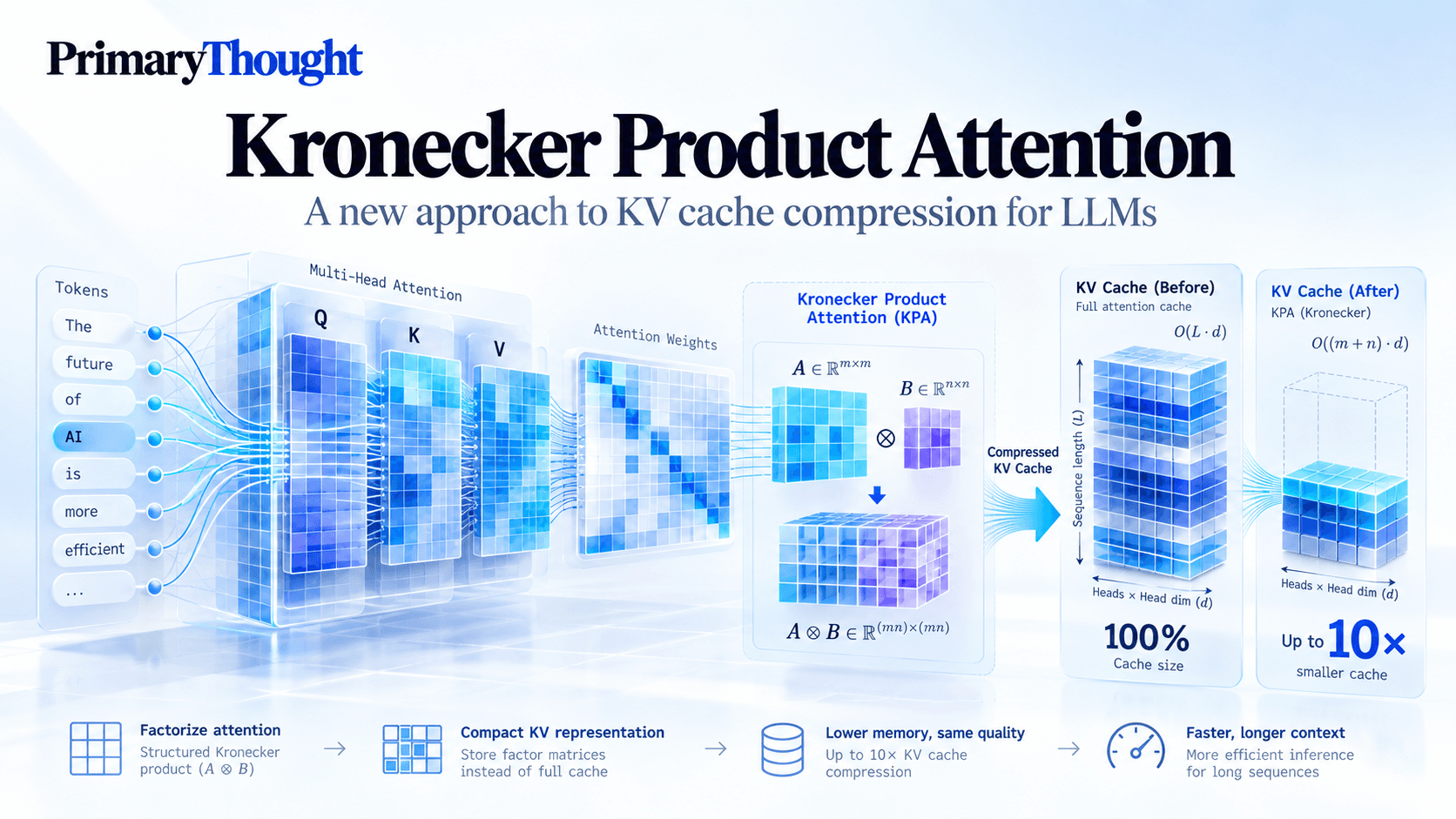
Kronecker Product Attention Claims 10x KV Cache Savings
A new arXiv preprint factorises the KV cache with Kronecker products, claiming up to 10x compression on small models. The evidence is early.
 Machine Learning
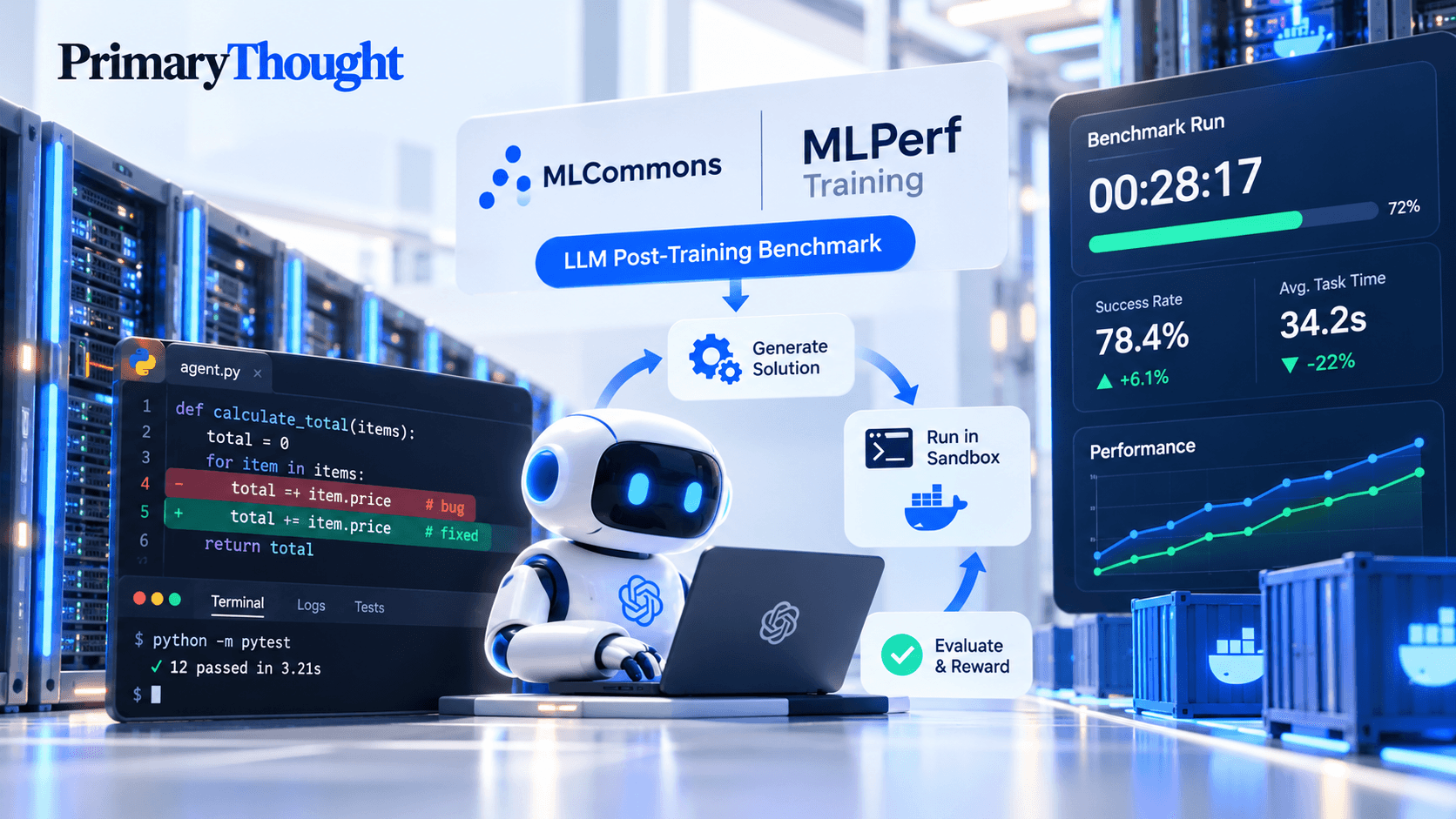
MLPerf Training Adds First LLM Post-Training Benchmark
MLPerf Training v6.1 will time how fast systems train Qwen 3.5 397B with reinforcement learning to fix real software bugs.
 Machine Learning
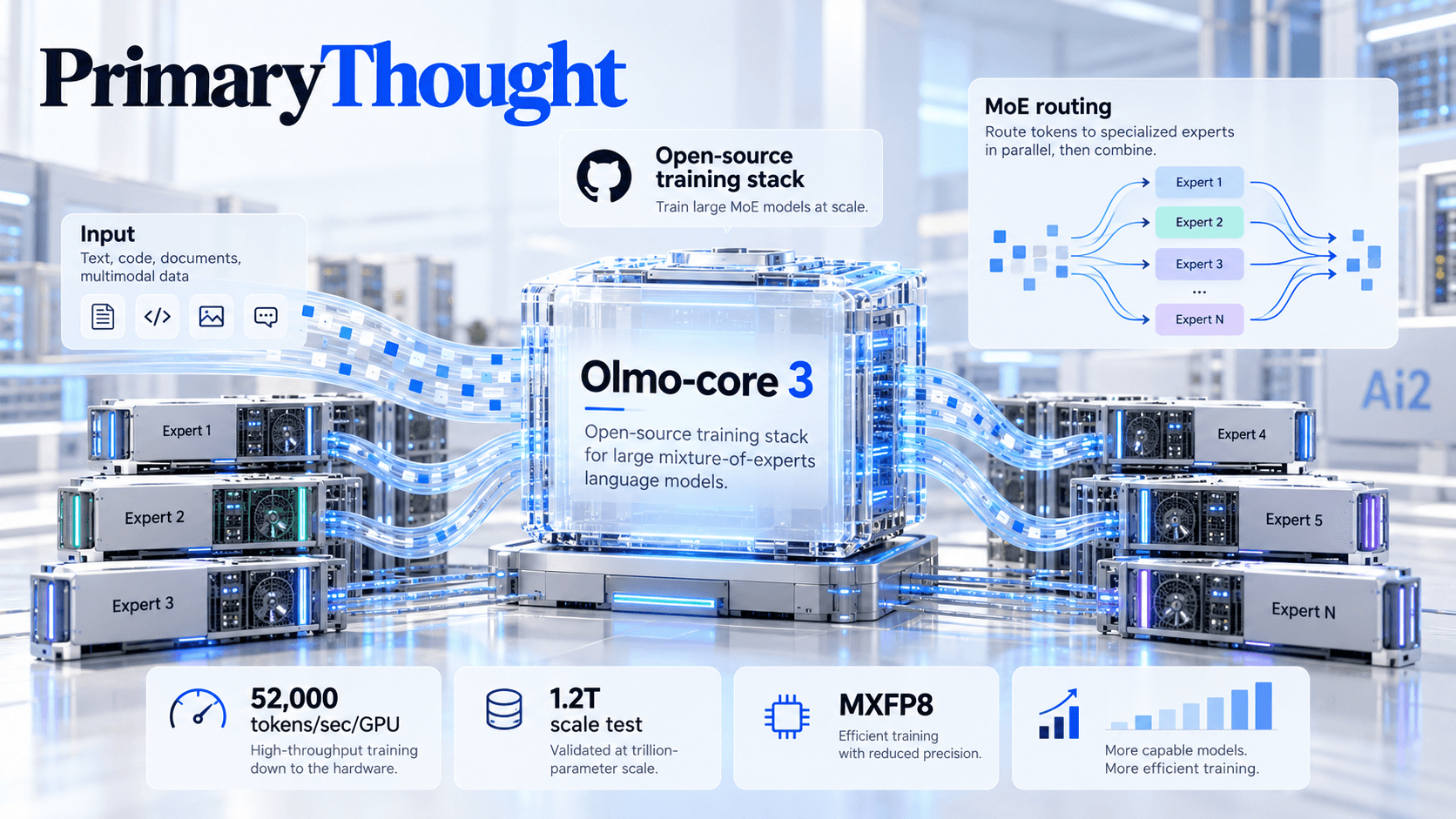
Ai2 Releases Olmo-core 3, an Open MoE Training Stack
Ai2's Olmo-core 3 is an open training stack for mixture-of-experts models, with self-reported 52,000 tokens/sec/GPU on a 47B MoE and candid failure notes.