
ElevenLabs Launches Eleven v4 and v4 Turbo With 90+ Languages and Improved Voice Cloning
ElevenLabs launched Eleven v4 and v4 Turbo on 28 September 2026, expanding support to over 90 languages and introducing improved instant voice cloning using just 10 seconds of source audio. The models also offer enhanced speech expression and faster responses for conversational AI applications.
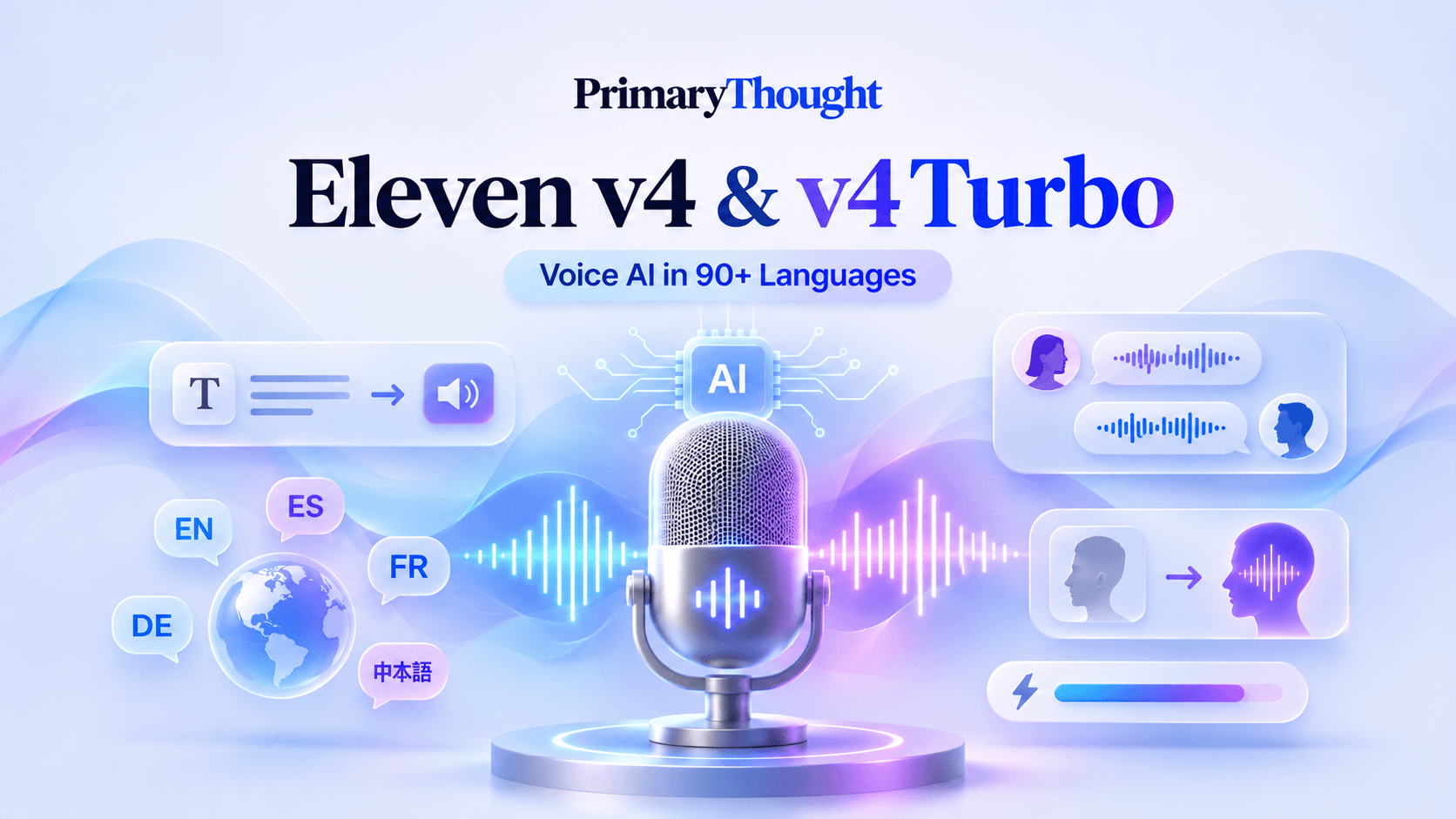
Voice AI company ElevenLabs released two new text-to-speech models, Eleven v4 and Eleven v4 Turbo, on September 28. The launch, detailed in a company blog post and covered by TechCrunch, extends language support to more than 90 languages and introduces a new architecture the company says makes instant voice cloning both faster and higher fidelity.
90 languages, better accent handling
Eleven v4 and v4 Turbo both support more than 90 languages, with ElevenLabs highlighting notable quality improvements in Japanese, Brazilian Portuguese, Mandarin, and Cantonese. According to the company's blog post, a voice recorded in one language can now speak fluently in any of the others while adopting the accent of a native speaker in the target language, but retaining the original speaker's vocal identity, with what ElevenLabs describes as noticeably stronger accent adherence than in previous model generations.
The improvements extend beyond pronunciation. ElevenLabs says the models handle rhythm, emotion, and delivery more naturally across languages, helping translated speech reflect local speaking patterns. For dubbing projects, this could make it easier to retain a consistent brand or character voice across different markets. However, support for more than 90 languages does not establish identical performance in every language, and the company has highlighted improvements in specific markets rather than publishing equivalent results for all supported languages.
Faster, higher-fidelity voice cloning
One of the biggest improvements in Eleven v4 is its voice cloning capability. ElevenLabs says its new architecture allows Instant Voice Clones to be generated from just 10 seconds of source audio, and that these instant clones in Eleven v4 now outperform the Professional Voice Clones (PVC) produced by the company's older Multilingual v2 model. Professional Voice Clones, which require more source audio but produce higher-fidelity results, are also returning in v4 after being unavailable during the company's earlier v3 release.
For companies building voice products, Eleven v4 offers improved Instant Voice Cloning alongside the return of Professional Voice Cloning. This gives users a choice between creating voices from shorter recordings and using a more advanced cloning option for projects requiring greater fidelity.
More expressive, more controllable
Eleven v4 also expands ElevenLabs' inline expression-tag system, which lets users insert cues directly into text to control delivery, such as [laughs], [said angrily in French accent], [light rain], or [phone buzzing]. The company says these tags can now be stacked for more nuanced control over tone, pacing, and emotion, and that the model maintains a speaker's voice identity more consistently over long-form text than prior versions. ElevenLabs also says the new model reproduces effects like laughter, whispering, and ambient sounds such as a door slamming more reliably than its predecessor.
The update also improves support for International Phonetic Alphabet (IPA) phonemes, which allows users to specify how words should sound. ElevenLabs' pronunciation dictionaries can define the spoken forms of names, acronyms and technical terms. The company also says v4 uses the context of a conversation to produce more natural exchanges between multiple speakers, rather than treating each line independently. These features could be useful for audiobooks, scripted dialogue and recordings where consistent pronunciation matters.
Two models, two use cases
ElevenLabs is positioning the two models for different jobs. The standard Eleven v4 model is built for content where delivery matters as much as the words themselves, such as narration, dubbing, and long-form audio, and the company says it currently ranks first on independent benchmarking site Artificial Analysis. Eleven v4 Turbo instead targets latency-sensitive applications like conversational voice agents, with a median time-to-first-speech of roughly 150 milliseconds, prioritizing fast response over maximal expressiveness.
ElevenLabs' developer documentation identifies separate interfaces for the two models. Eleven v4 uses the Text to Dialogue API for content production, while v4 Turbo supports a WebSocket connection designed for interactive applications. Turbo can receive text as it is generated and begin returning audio before the complete response is available. ElevenLabs also reports approximately 100 milliseconds of median inference latency for Turbo. This differs from the 150-millisecond median time-to-first-speech figure, which describes when audible output begins. Both figures are company-reported measurements, not guarantees of response times in every application.
In its launch announcement, ElevenLabs also reported that approximately 75% of listeners preferred v4 in blind head-to-head comparisons with selected competing models. The company cited a first-place ranking on Artificial Analysis, but these results should be interpreted in the context of the specific tests conducted. They do not establish that v4 performs best across every language, voice, or production environment. Broader independent testing would help determine how consistently the reported advantages translate into practical use.
Long-form audio and voice consistency
According to ElevenLabs' documentation, Eleven v4 supports up to 10,000 characters in a single generation. Longer recordings can use context stitching, which connects separate generations to help maintain consistent pacing and delivery. This is particularly relevant to audiobooks and extended narration, where changes in speaking style between sections can be noticeable.
The company also says v4 maintains speaker identity more reliably when individual lines are regenerated. For production teams, this could make it easier to revise passages without introducing obvious differences in the narrator's voice. These improvements are company claims and may still require testing on longer projects.
Availability
Both models are available through ElevenLabs' ElevenAgents and ElevenCreative products, as well as via the company's API. According to ElevenLabs' official product page, users can try Eleven v4 through a free plan that includes 10,000 monthly credits. Paid plans offer higher usage limits and additional features, including Professional Voice Cloning, while enterprise customers can access customised plans for larger workloads.
Why it matters
ElevenLabs has built its business on being a default choice for developers who need production-grade text-to-speech, competing with offerings from OpenAI, Google, and a growing set of open-source alternatives. Cutting the audio needed for a usable voice clone down to 10 seconds lowers the barrier for smaller developers and creators to build personalized voice products, while the expanded language list pushes further into markets, particularly in Asia and Latin America, where the company's earlier models were comparatively weaker. The restoration of Professional Voice Clones alongside a stronger instant-cloning baseline also suggests ElevenLabs is trying to avoid the trade-offs that reportedly came with its v3 release, where some higher-fidelity cloning options were temporarily unavailable.
The release also lands as voice cloning technology faces growing regulatory and platform-level attention over misuse in scams and deepfakes. A model that needs only 10 seconds of audio to produce a convincing clone raises the stakes on how ElevenLabs verifies consent and detects misuse, even as it makes the underlying product more useful for legitimate applications like localization, audiobook production, and customer-service voice agents.
What to watch next
Worth tracking: how quickly ElevenLabs' claimed benchmark lead on Artificial Analysis holds up against competing releases, whether the improved non-English language quality closes the gap with region-specific voice AI providers, and how the company's cloning technology is governed against misuse as it becomes faster and more accessible.
Frequently Asked Questions
What did ElevenLabs release on September 28?
ElevenLabs released two new text-to-speech models, Eleven v4 and Eleven v4 Turbo, expanding language support to more than 90 languages and introducing faster, higher-fidelity voice cloning.
How much audio is needed to clone a voice with Eleven v4?
ElevenLabs says Instant Voice Clones can now be generated from just 10 seconds of source audio, and that these clones outperform the Professional Voice Clones produced by the company's older Multilingual v2 model.
What is the difference between Eleven v4 and v4 Turbo?
Eleven v4 is built for content where expressive delivery matters, such as narration and dubbing, while Eleven v4 Turbo is optimized for low-latency use cases like conversational voice agents, with a median time-to-first-speech of about 150 milliseconds.
What are expression tags in Eleven v4?
Expression tags are inline cues like [laughs] or [said angrily in French accent] that users insert into text to control delivery, tone, and pacing. Eleven v4 allows multiple tags to be stacked for more nuanced control.
Where can I use Eleven v4?
Eleven v4 and v4 Turbo are available now through ElevenLabs' ElevenAgents and ElevenCreative products and via the ElevenAPI.
Related articles
 Tools & Frameworks
Anthropic Opens Claude Marketplace With Over 2,000 Connectors and Plugins
Anthropic launched the Claude Marketplace on September 23, bundling more than 2,000 connectors, plugins, and Claude-powered products from partners like Atlassian, Notion, and Salesforce into a single catalog.
 Tools & Frameworks
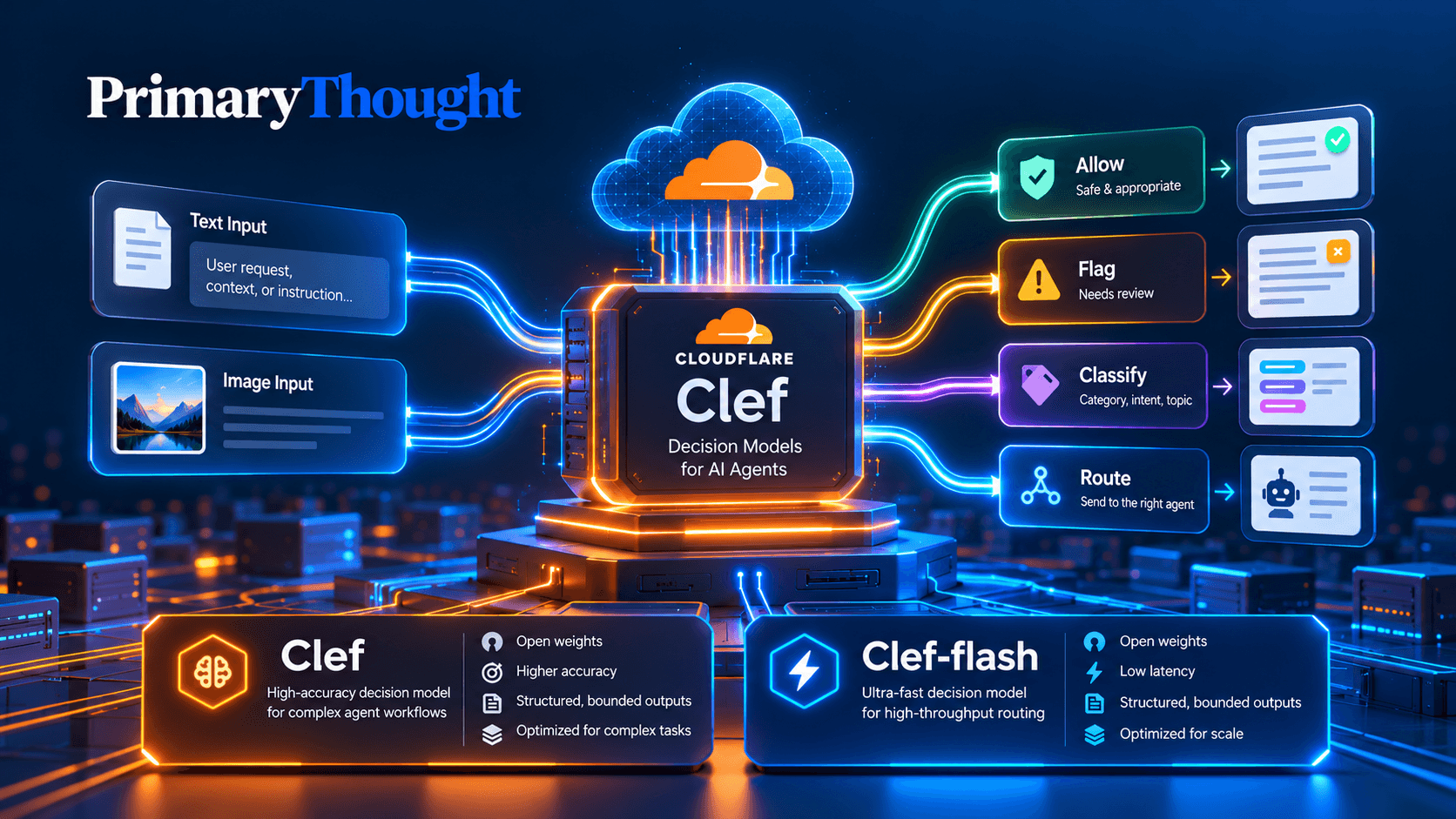
Cloudflare Releases Open-Weight Clef Models for AI Agents
Cloudflare has released Clef and Clef-flash, open-weight AI decision models that return scored answers instead of generated text. Licensed under Apache 2.0, they enter a growing market alongside similar offerings from OpenAI and Amazon.
 Tools & Frameworks
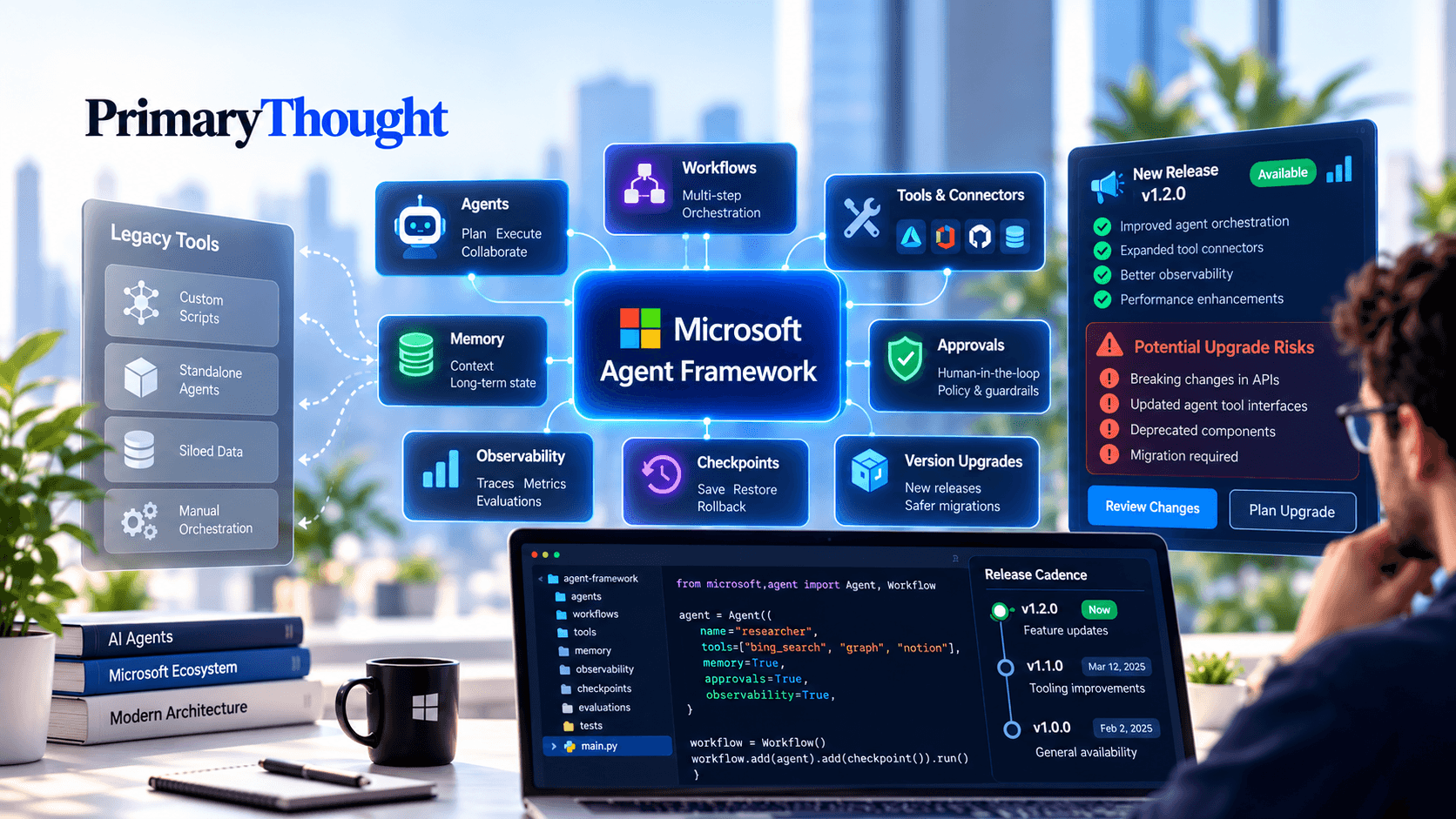
Microsoft Agent Framework Hits Python 1.22 and .NET 1.25
Six months after 1.0, Microsoft's agent framework ships weekly releases, a new harness agent and breaking changes that production teams should read first.