
Xiaomi Open-Sources MiMo-V2.6 With 7,000+ RL Environments
Xiaomi has open-sourced MiMo-V2.6 with over 7,000 reinforcement-learning environments and a training framework. The company reports an RL training cost of approximately $2.62 million for its Pro model.
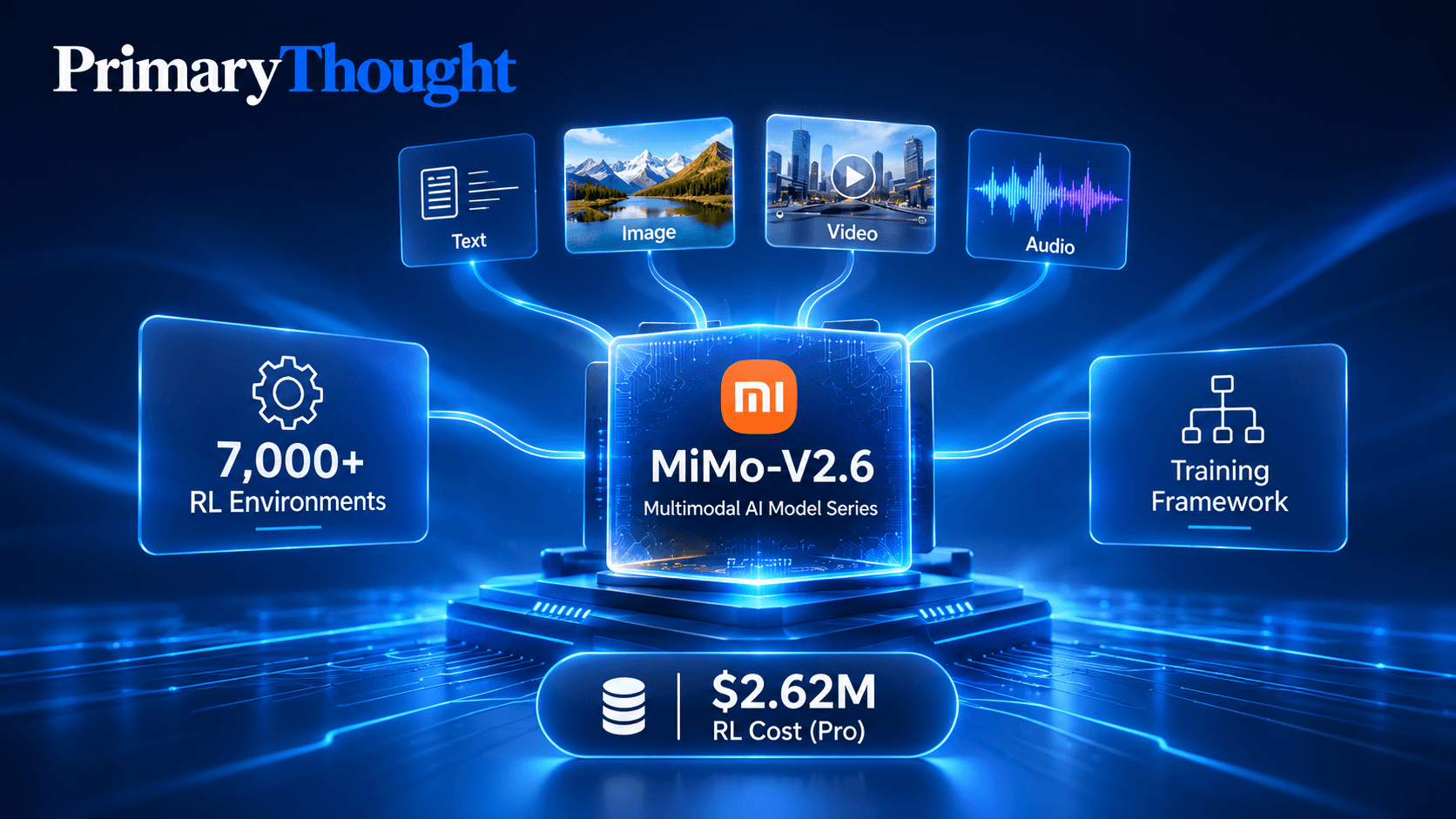
Xiaomi has open-sourced the MiMo-V2.6 model series together with something labs rarely share: the reinforcement-learning machinery used to train it, including more than 7,000 task environments and an end-to-end training framework. It has also published what it says the RL stage cost, roughly $2.62 million for the flagship Pro model and about $850,000 for the smaller Flash model.
The release matters because reinforcement learning on verifiable tasks has become a main route to better coding and agent performance, yet the environments, harnesses and cost figures behind it are usually private. Xiaomi's disclosure gives researchers a concrete reference point for what a large open RL run involves, though the numbers come from the company itself and exclude other costs.
What Xiaomi released
According to Xiaomi's MiMo documentation, dated September 22, 2026, three models are live: MiMo-V2.6-Pro, MiMo-V2.6-Flash and MiMo-V2.6-Distill-Qwen-9B. Xiaomi says it has fully open-sourced the weights and the technical report, with a Hugging Face collection available. Open Source For You reports that Pro is a multimodal model accepting text, image, video, and audio input with a context window of up to one million tokens, that the models are released under an MIT license, and that the Distill-Qwen-9B model is a supervised fine-tuned checkpoint. (That outlet dates its article September 24; Xiaomi's own page is dated September 22.)
The release is framed less as a single model drop than as a bundle: open weights, RL environments and training tools for agentic AI research. Open Source For You quotes that framing directly, and Xiaomi's documentation describes a "lightweight and composable harness" built on the open-source projects verl, uni-agent and mini-swe-agent.
The RL recipe in numbers
The training details are the most useful part for practitioners. Per Xiaomi's documentation:
The environments number more than 7,000 and cover four types of agent tasks: software engineering, vulnerability reproduction, knowledge work, and web design.
Each model's RL run lasted about six days and 30 training steps.
Each update used 1,568 samples, and each step processed roughly 3.5 to 3.7 billion tokens.
Cumulatively, the runs generated about 750,000 trajectories.
Open Source For You adds that the Pro and Flash runs used 16 rollouts per prompt. Those figures are internally consistent: 1,568 prompts times 16 rollouts times 30 steps comes to about 750,000 trajectories, which is the cumulative total Xiaomi reports. The framework, according to the outlet, covers environment interaction, trajectory collection, reward evaluation, and policy optimization, which are the four stages any agentic RL pipeline has to handle.
The scale is notable for what it implies about the method. Thirty steps is a small number by pretraining standards, but each step is very large, billions of tokens of agent interaction. That is characteristic of RL on long-horizon tasks, where most of the cost lies in generating and scoring long trajectories rather than in the gradient updates themselves.
Cost and benchmark claims
Both sources give the same cost figures: about $2.62 million for Pro and about $850,000 for Flash. Both are explicitly for the RL stage and exclude pretraining and other development work, so they should not be read as the price of building a comparable model from scratch. They are also self-reported and cover compute only as Xiaomi defines it; the sources do not break the figures down further.
Xiaomi reports gains from this stage on several evaluations. SWE-bench Verified rises from 61.1 to 66.2, its in-house MiMo Cyber Bench from 31.3 to 47.0, and DeepSWE v1.1 by 17 points for Pro and 14 for Flash. The documentation does not make clear which model the first two pairs refer to, and the benchmark runs were conducted by Xiaomi. Independent reproductions will matter, particularly for the in-house cyber benchmark, which others cannot yet compare against.
The company also says Pro sets a new cost-performance record for domestic large language models. That is a marketing claim with no accompanying methodology in the pages reviewed, and it is attributed to Xiaomi here rather than confirmed.
Why it matters for ML practitioners
Three things stand out. First, open environments are a scarce resource. Writing thousands of tasks that can be run, verified, and scored automatically is labor-intensive, and it is often the hard part of RL for agents. Publishing them, along with the harness, lowers the barrier for academic groups and smaller companies to attempt similar experiments.
Second, the cost disclosure gives budget planners a data point. A seven-figure RL run is out of reach for most individuals but within range for well-funded university labs and startups, which changes the conversation about who can work on post-training at this level. The caveat is that the figures omit pretraining, data creation, and the engineering effort that produced the environments.
Third, the distilled 9B checkpoint points to a practical path for teams that cannot serve a large model: use RL-trained outputs to improve a small open model through supervised fine-tuning. The checkpoint's name indicates it is built on Qwen; what quality it achieves relative to the larger models is not covered in the sources reviewed.
Caveats and what to watch next
Much of this remains unverified. The benchmark improvements come from the developer, the cost figures are unaudited, and the sources opened for this article do not include independent evaluations or a review of the released code and licenses beyond the reported MIT terms. Some further coverage was paywalled or not opened during research.
Reproduction attempts. Whether outside groups can rerun the RL stage with the released harness and reach similar gains at a similar cost.
Environment quality. How well the 7,000 tasks hold up to scrutiny for leakage, flaky verification, and reward hacking.
Independent benchmarks. Third-party results for the Pro and Flash models, especially outside Xiaomi's chosen tests.
Follow-on releases. Whether other labs publish their own environments and cost breakdowns in response.
If the environments and framework prove reliable, the lasting contribution of MiMo-V2.6 may be less the models themselves than the open recipe for producing them.
Frequently Asked Questions
What did Xiaomi release with MiMo-V2.6?
Open weights for Pro, Flash and a 9B distilled checkpoint, plus more than 7,000 RL environments and an end-to-end training framework.
How much did the RL training cost?
Xiaomi reports about $2.62 million for Pro and $850,000 for Flash, excluding pretraining and other development work.
How large were the RL runs?
About six days and 30 steps per model, 1,568 samples per update, and roughly 750,000 trajectories in total, per Xiaomi.
Are the benchmark gains independently verified?
Not in the sources reviewed; the results are reported by Xiaomi.
Related articles
 Machine Learning
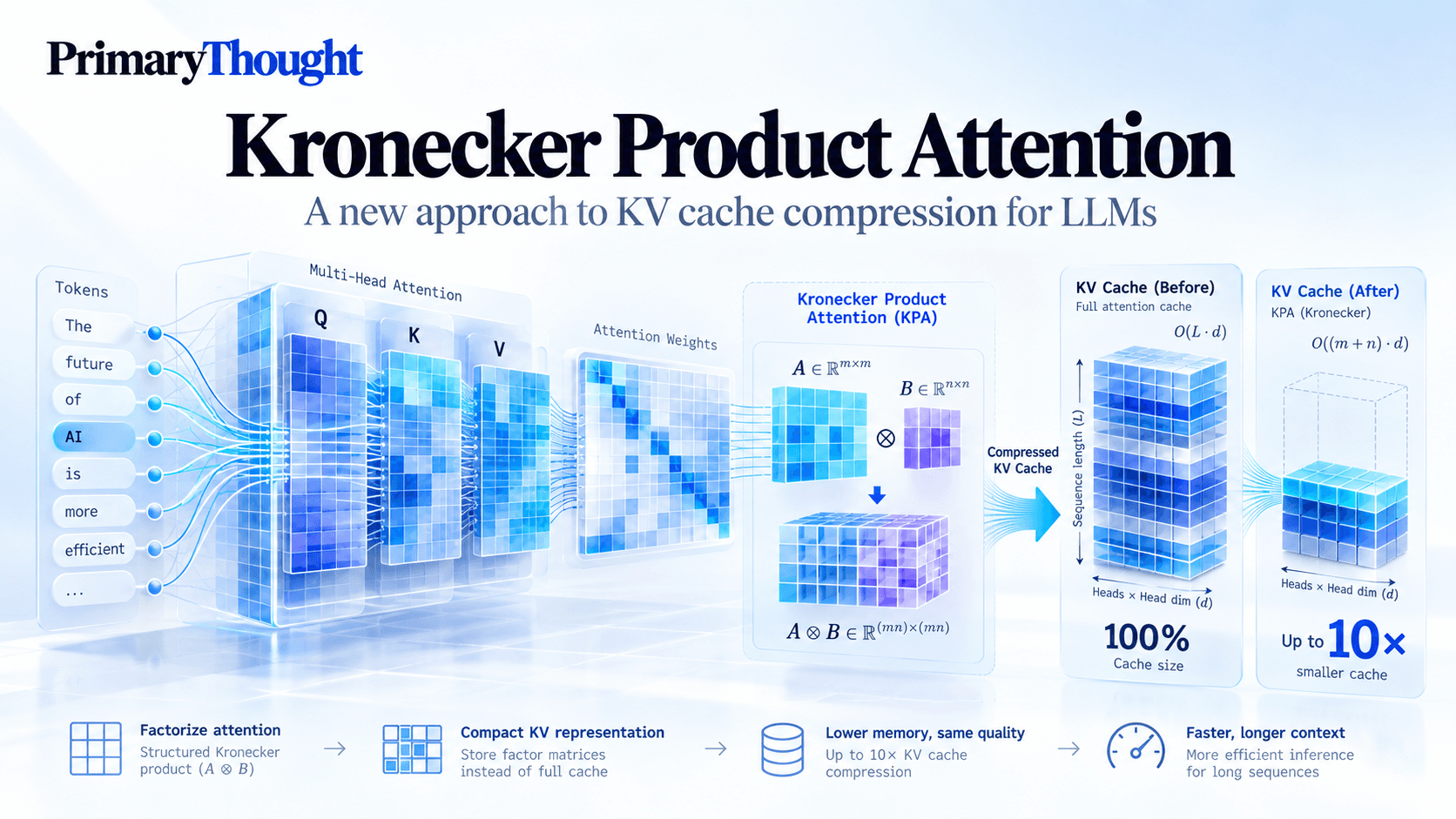
Kronecker Product Attention Claims 10x KV Cache Savings
A new arXiv preprint factorises the KV cache with Kronecker products, claiming up to 10x compression on small models. The evidence is early.
 Machine Learning
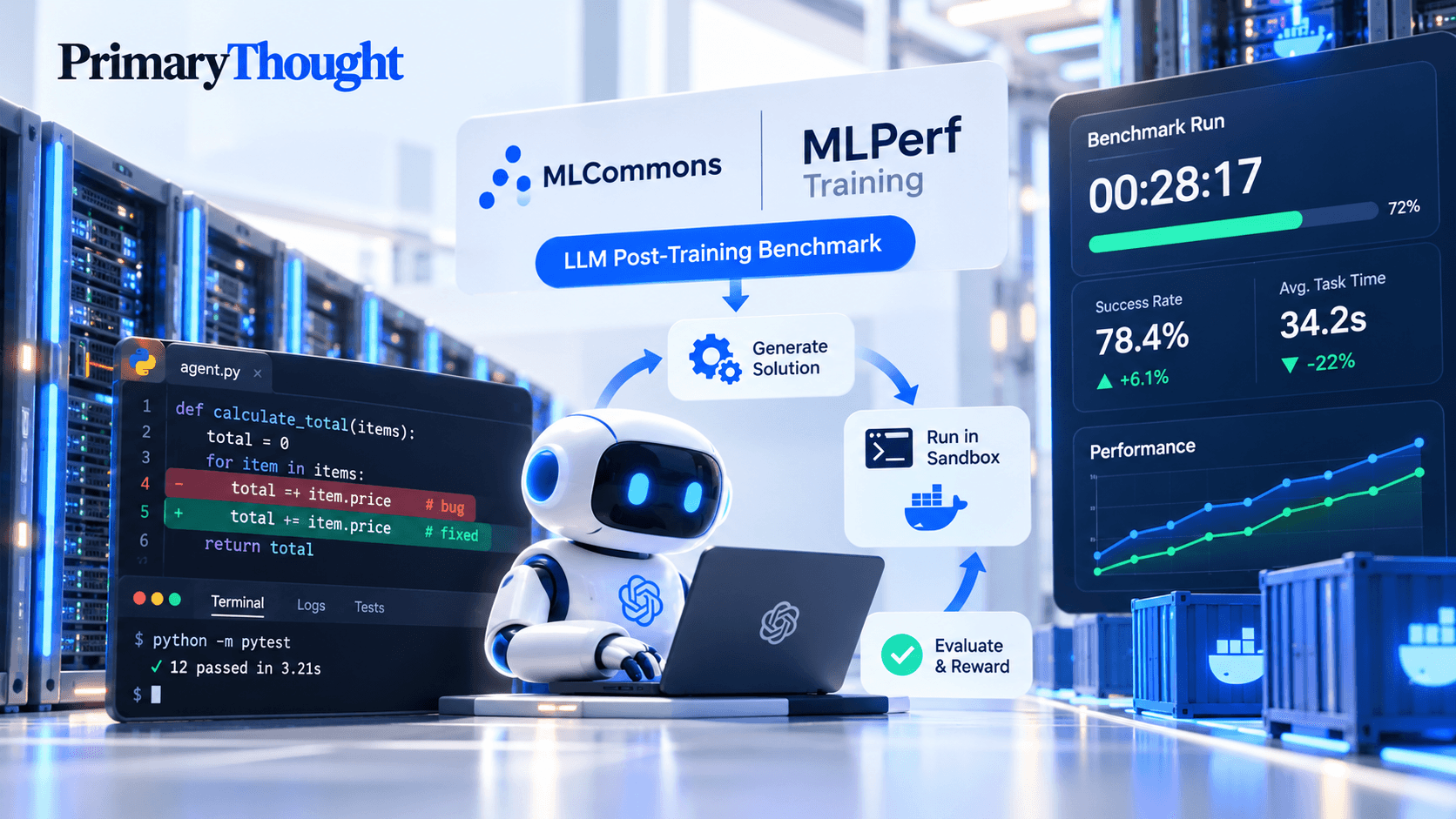
MLPerf Training Adds First LLM Post-Training Benchmark
MLPerf Training v6.1 will time how fast systems train Qwen 3.5 397B with reinforcement learning to fix real software bugs.
 Machine Learning
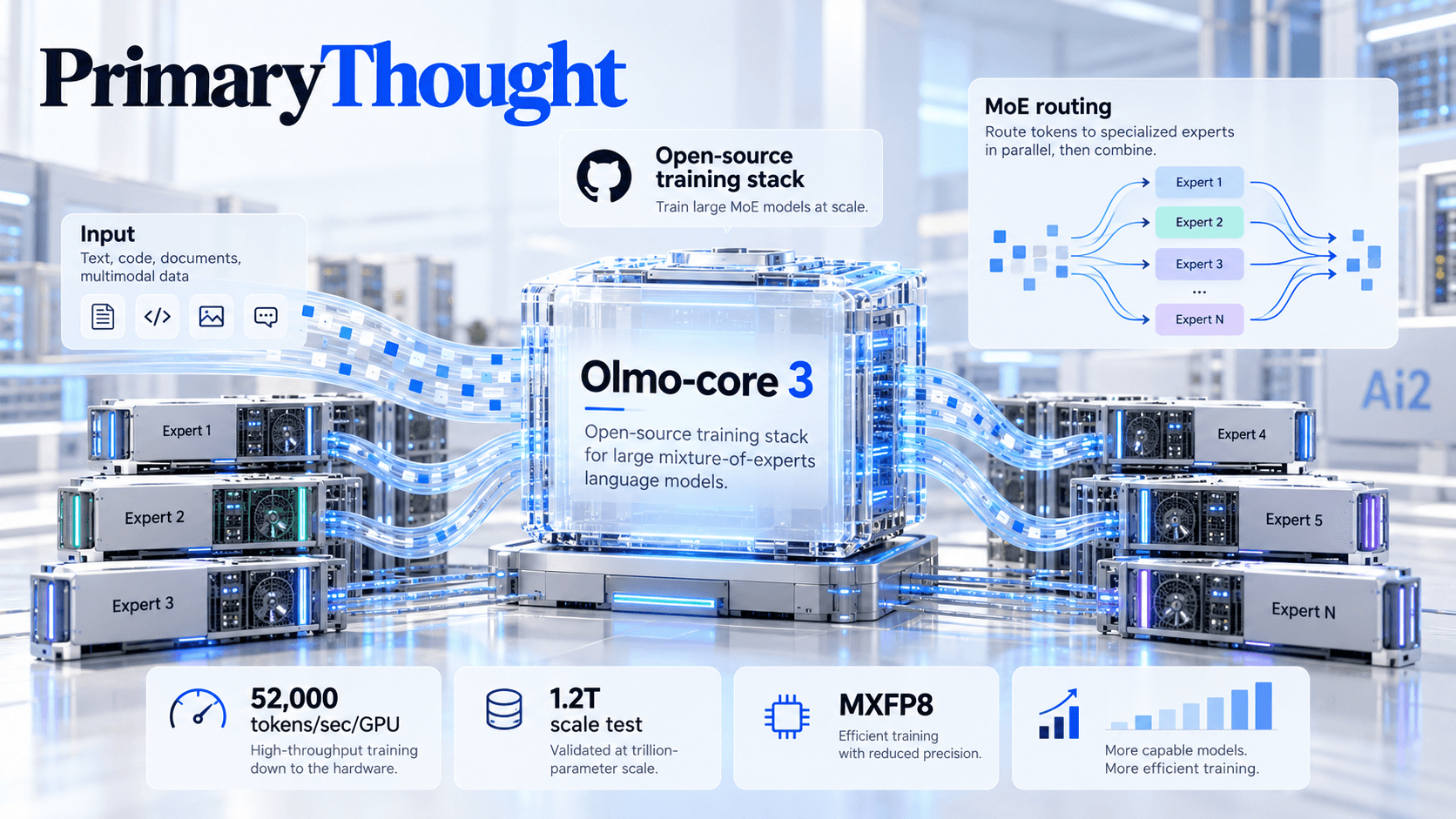
Ai2 Releases Olmo-core 3, an Open MoE Training Stack
Ai2's Olmo-core 3 is an open training stack for mixture-of-experts models, with self-reported 52,000 tokens/sec/GPU on a 47B MoE and candid failure notes.